Home
Q&A
Weekend Subjunctive Practice 2: Para que

Weekend Subjunctive Practice 2: Para que

11
votes

¡Bienvenido a nuestro hilo! Each weekend, Cordobesa and I will present a different topic on everybody’s favorite subject… the subjunctive!

We will give an explanation of the topic, and a couple of examples.

Write sentences at least 5 words long. Write your Spanish sentence, and include the English translation as well. Make the corrections suggested by Cordobesa in the comments section. Use your own words! (Don't use a translator, copy from a book, use song lyrics, etc.)

Post pictures if you’d like, and don’t forget to vote on the sentences you like best. The winner will be chosen based upon the correct use of the topic as well as the number of votes.

¡Vamos allá!

Weekend Subjunctive Practice 2: Para que

Explanation:

When you have a change of subject, the subjunctive follows "para que" which is used to mean "so", "so that", or "in order that". In the first example below, "I" am the one who will call you, and "we" are the ones who will talk about the plans. In the second example, "you" are the one who will have to study more, and "the exam" is the thing that will hopefully go well.

Examples:

Te llamo esta noche para que podamos hablar sobre los planes.

I'll call you tonight so we can talk about the plans.

Tendrás que estudiar más para que te vaya bien el examen.

You will have to study more so you do well on the exam (lit: so the exam goes well for you).

¡Prestad atención!

If there is not a change of subject, "para" is used to mean "so", "so that", or "in order that", and the infinite follows. In the example below, "I" am the one who has to study more, and "I" am the one who will hopefully pass the exam.

Example:

Tendré que estudiar más para aprobar el examen.

I will have to study more in order to pass the exam.

¿Entendéis la diferencia? ¡Espero que sí! smile

¡Os toca a vosotros!

Click here for last weekend’s subjunctive practice: Cuando

2593 views
updated Apr 12, 2015
edited by Tosh
posted by Tosh
Muchas gracias amigos. :)♥♥ - rac1, Nov 15, 2014
Gracias a ambos. - annierats, Nov 16, 2014
Gracias a vosotras por participar. :) - Cordobesa, Nov 16, 2014
I'll try to get back to this tomorrow. Thanks for the great thread. - katydew, Nov 17, 2014

14 Answers

11
votes

Stress not allowed

Él llamó a los bomberos para que apagaran el fuego

He phoned to the firemen in order that they extinguish the fire.

updated Nov 22, 2014
edited by txustaboy
posted by txustaboy
Is my English sentence correct? - txustaboy, Nov 15, 2014
I would say, "He phoned the firemen so they could extinguish the fire." - rac1, Nov 15, 2014
Totally correct, txta, but we would perhaps say " so that they could put the fire out" . - annierats, Nov 15, 2014
So, is it "phone the firemen" or "phone to firemen"? - txustaboy, Nov 16, 2014
Phone for the fire brigade! - annierats, Nov 16, 2014
13
votes

Voy a darte el biberón para que crezcas sano y fuerte.

I’ll give you your bottle so you grow up healthy and strong.

enter image description here

updated Nov 19, 2014
edited by Cordobesa
posted by Cordobesa
How precious! - rac1, Nov 15, 2014
Ah...sweet. - annierats, Nov 15, 2014
10
votes

Hola Tosh y Cordobesa!,

original: Tengo que pienso de algo para que escribir en este hilo.

Correct: Tengo que pensar de algo para escribir en este hilo.

I have to think of something so I can write in this thread.

Necesito hablar con mi papá mañana para que podamos discutir la fiesta de cumpleaños de mi mamá del [próxima] proximo jueves.

I need to talk with my dad tomorrow so that we can discuss my mom's birthday party next Thursday.

updated Nov 19, 2014
edited by sanlee
posted by sanlee
¡Hola, Sanlee! En la segunda frase, solo un pequeño cambio: "próximO". En la primera frase tienes el mismo sujeto en las dos partes, así que mejor usar el infinitivo en vez del subjuntivo: "Tengo que pensar en algo para escribir en este hilo". :) - Cordobesa, Nov 16, 2014
¡Muchas gracias, Cordobesa! - sanlee, Nov 16, 2014
Hola sanlee! Tienes que borrar "que" antes de "escribir", también. :) - Tosh, Nov 16, 2014
Hola Sanlee, como estas\? - annierats, Nov 16, 2014
Muchas gracias Tosh, Voy a borrar que ahora . - sanlee, Nov 16, 2014
Hola Annie, Estoy bien gracias, ¿y tú? - sanlee, Nov 16, 2014
Hola Tosh, No sé como usar "strike out" así que escribí la oración como así. Espero que está bien. - sanlee, Nov 16, 2014
If you want to try it, put < s> before the word and < /s> after the word you want to strike out. :) - Tosh, Nov 16, 2014
(without the spaces after the < sign) - Tosh, Nov 16, 2014
I did "pienso" for you so you could see how it works. - Tosh, Nov 16, 2014
Thanks Tosh, I will try again, I always had trouble with that. - sanlee, Nov 17, 2014
Hi Tosh, I don't see what I am doing wrong. Está bien pero si quieres, por favor cambiarla. - sanlee, Nov 17, 2014
Take the space out in front of the "/s" :) - Tosh, Nov 17, 2014
Wow Tosh. It only took 5 more tries. Mil gracias!. - sanlee, Nov 17, 2014
10
votes

enter image description here

Debemos estudiar para que todo el mundo sea inteligente a nuestro alrededor.

We have to study that everybody should be intelligent in our surroundings.

updated Nov 19, 2014
edited by porcupine7
posted by porcupine7
"a nuestro alrededor" suena mejor. :) - Cordobesa, Nov 16, 2014
Gracias Cordobesa - porcupine7, Nov 17, 2014
:) - Cordobesa, Nov 17, 2014
9
votes

Llámame al móvil para que te cuente lo que pasó.

Call me on my mobile phone so I can tell you what happened.

updated Nov 19, 2014
posted by rac1
Perfect spanish sentence :) - txustaboy, Nov 15, 2014
Yeah! Muchas gracias. :):) - rac1, Nov 15, 2014
Muy bien, Rac. :)) - Cordobesa, Nov 16, 2014
Gracias Cordo. :)♥ - rac1, Nov 16, 2014
De nada, Rac. :) - Cordobesa, Nov 16, 2014
8
votes

Me encanta tener un hilo para poder practicar el sujuntivo, mi pasatiempo favorito.

I just love having a thread so that I can practice the subjunctive, which is my favourite hobby.

updated Nov 19, 2014
edited by annierats
posted by annierats
Me alegro mucho, jeje. En tu frase no necesitas el subjuntivo, porque tú te alegras y tú puedes practicar el subjuntivo, así que "Me encanta tener un hilo para poder practicar...". ;) - Cordobesa, Nov 16, 2014
Gracias! This shows how much the practice is needed! - annierats, Nov 16, 2014
Con subjuntivo, por ejemplo: "Me encanta tener un hilo para que podamos practicar el subjuntivo". :) - Cordobesa, Nov 16, 2014
"favourite" is spelled incorrectly. :) - Tosh, Nov 16, 2014
I say favorite, She says favourite. Todo va bien. ¿no? - sanlee, Nov 17, 2014
I just joke around with Annie... she knows I'm kidding. :) - Tosh, Nov 17, 2014
:)) - Cordobesa, Nov 17, 2014
8
votes

I will take a photo of your birthday so that you will have it when you are older.

Voy a sacar una foto del cumpleaños para que la tengas cuando seas eres mayor.

enter image description here

updated Nov 19, 2014
edited by katydew
posted by katydew
Very nice - porcupine7, Nov 17, 2014
¡Una frase con dos subjuntivos! "...tengas cuando seas mayor." :) - Cordobesa, Nov 17, 2014
Gracias Cordobesa! - katydew, Nov 18, 2014
:)) - Cordobesa, Nov 18, 2014
7
votes

He plants his bulbs in the fall so that they bloom in the spring.

Él planta sus bulbos en el otoño para que se abran en la primavera.

enter image description here

updated Nov 19, 2014
posted by AnnRon
Muy bien, Ann. You can also omit the articles: "en otoño" and "en primavera". - Cordobesa, Nov 16, 2014
Gracias, Cordobesa. - AnnRon, Nov 16, 2014
De nada. :) - Cordobesa, Nov 17, 2014
6
votes

No sé nada del subjuntivo así que tengo que practicar para que hablemos juntos algún día.

I know nothing about the subjunctive and that's why I have to practice it so that we can talk together some day.

updated Nov 20, 2014
edited by victo
posted by victo
"No sé nada del..." Are you sure you don't know anything about it? :) - Cordobesa, Nov 19, 2014
Wow, really? Thanks Cordobesa! - victo, Nov 19, 2014
Really, hahaha. :) - Cordobesa, Nov 19, 2014
Cool! Thanks, Cordobesa! - victo, Nov 20, 2014
:)) - Cordobesa, Nov 20, 2014
6
votes

En clima Con tiempo frío, el agua fluye de las rocas hacia abajo las rocas para que los carámbanos se formen.

In cold weather, the water flows down the rocks so that icicles form.
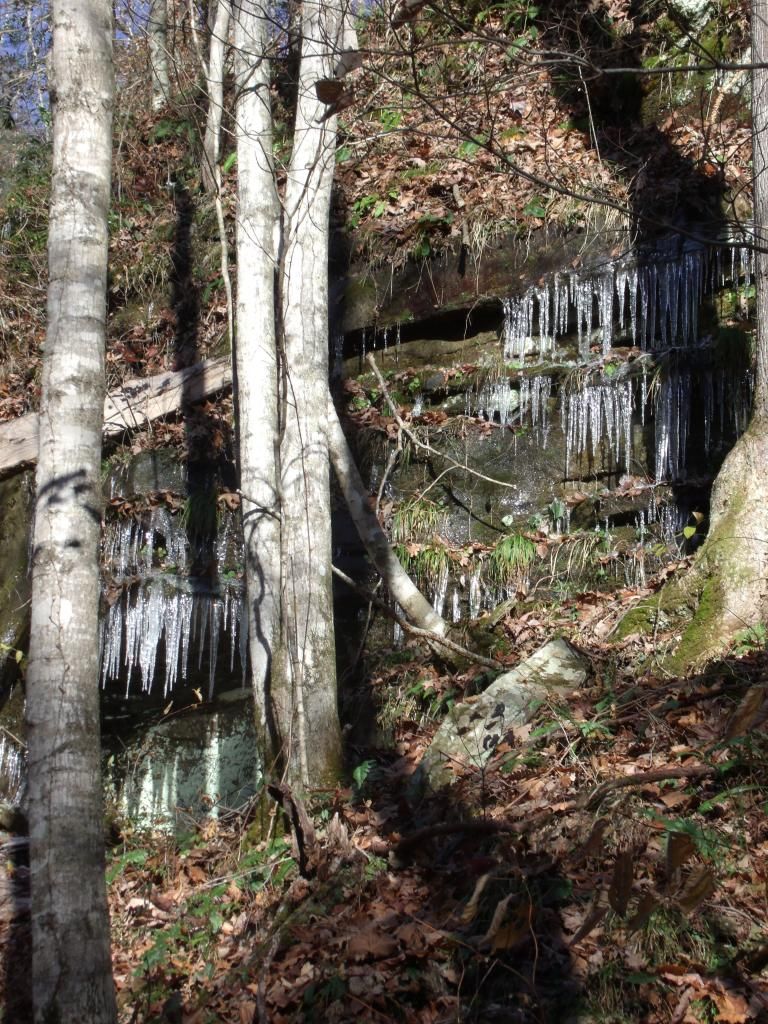
enter image description here

updated Nov 19, 2014
edited by bandit51jd
posted by bandit51jd
water flows is one subject and icicles forming is the second subject, I hope :) - bandit51jd, Nov 19, 2014
"Con tiempo frío, el agua fluye de las rocas hacia abajo para que los carámbanos se formen" :) - Cordobesa, Nov 19, 2014
Alright I got 2 subjects but I messed up on adverb placement? Gracias, Cordebesa! - bandit51jd, Nov 19, 2014
De nada. :) - Cordobesa, Nov 19, 2014
6
votes

Estoy estudiando español para que la familia de mi nuera me puedan entender.

I am studying Spanish so that my daughter-in-law's family can understand me.

updated Nov 19, 2014
posted by jennysk
Muy bien, Jennysk. Ten en cuenta que "la familia" es singular, así que sería "me pueda entender". :) - Cordobesa, Nov 18, 2014
5
votes

Vuelvo a mi casa a las cinco en punto para que mi esposa pueda ir a su trabajo a tiempo.

I return to my house at 5 exactly so that my wife can go to her work on time.

updated Nov 24, 2014
posted by biengracias
Muy bien. :) - Cordobesa, Nov 19, 2014
Gracias, Cordobesa - biengracias, Nov 20, 2014
:)) - Cordobesa, Nov 20, 2014
:} - biengracias, Nov 24, 2014
5
votes

¿Para qué trabajo? Trabajo para que mi esposa pueda gastar dinero, pero esto no me molesta debido a que una parte de lo que ella compra es para mí, y especialmente debido a que casi nunca tengo que ir de compras, y si tengo que hacerlo, casi siempre es solo para comprar un regalo para ella.

Why do I work? I work so that my wife can spend money, but that doesn’t bother me because a part of what she buys is for me, and especially because I almost never have to go shopping, and if I do have to, almost always it is to buy a gift for her.

enter image description here

updated Nov 19, 2014
posted by bosquederoble
Nada que corregir. :)) - Cordobesa, Nov 19, 2014
Gracias por comprobarlo Cordobesa. :) - bosquederoble, Nov 19, 2014
:)) - Cordobesa, Nov 19, 2014
1
vote

Hacemos amigos para que la vida haga una fiesta.

We make friends so that life becomes a party.

updated Apr 7, 2015
edited by pankaj_esp
posted by pankaj_esp
Suena mejor "para que la vida sea una fiesta" o "para que la vida se convierta en una fiesta". :) - Cordobesa, Apr 7, 2015















