
Differentiate the usage of Direct/Indirect Object Pronouns
Hola, tengo una pregunta sobre el uso de lo/la/los/las v.s. le/les.
Ejemplo:
Mi padre está enfermo, y lo llevo al hospital.
Colloquially, will it be:
Mi padre está enfermo, y le llevo al hospital
If the object is personal, would it always be expressed in this way?
When I looked at other grammar books, they always used two nouns to differentiate "lo" and "le" Ejemplo: Hoy es el cumpleaños de mi hermano, y le compré un móvil. ?mi hermano/móvil, le=mi hermano?
But if I learn other vocabulary, I don't really know whether I should use direct or indirect object pronouns. Ejemplo: prohibir a algn hacer algo El chico violó la rey, por eso el gobierno le prohibió salir de país.
mandar a algn a hacer algo Mi hermano estuvo libre, y lo mandé a comprar pan.
Is there a rule like: le + verbo + infinitivo /lo + verbo + a + infinitivo??
Thanks for your reading!
4 Answers
Hi, Zongy: I see your profile has been filled in and as you may have seen from my comments this is sort of complicated. What I will do is come back tomorrow and give you as clear an answer as I possibly can, with some links to further information. I teach this stuff in a community college, and after several sessions the students get it. You have sort of an idea how to do it. but you need the insight I can give you so you'll have a clear grasp of it. So "Hasta mañana" for now. In the words of the Terminator "¡¡Ill be back!!
Just a little hint "lo" and "la" are "direct object pronouns either "him" "her" or "it"
Whereas "le" can mean to him or her, for him or her and even "from him or her."
Some fun, huh?
I'm back.
Since you state your level in Spanish as "intermediate" I'm going to assume that you know something about direct and indirect pronouns. In case you've forgotten, here are some links that are good.
direct object pronoun placement
Now with this in mind, I'm going to give a few examples.
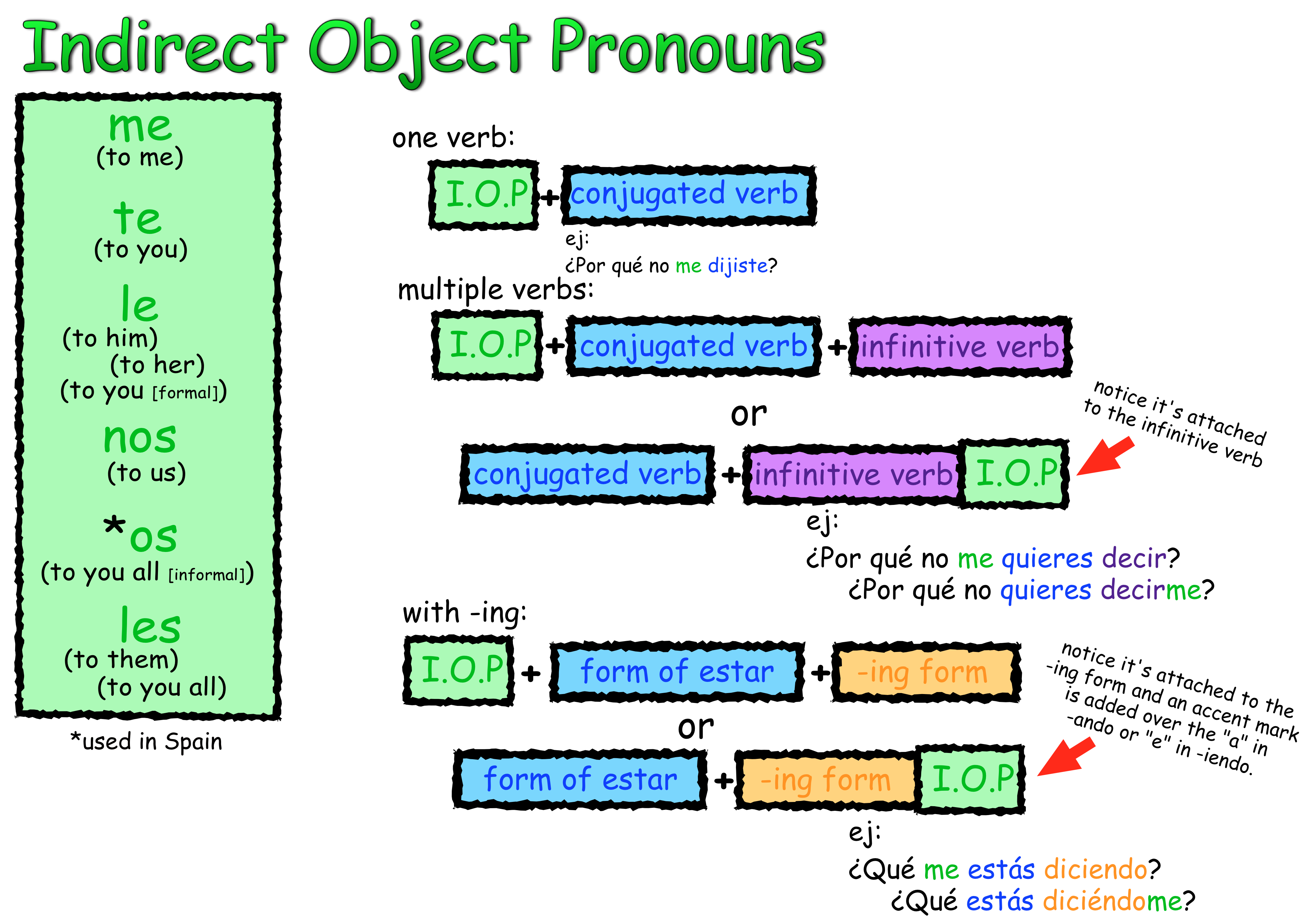
Quiero comprarle (or "le quiero comprar") una camisa nueva a mi hermano. This translates as "I want to by a new shirt for my brother." The use of the indirect object pronoun in the same sentence as the indirect object drives English speakers "loco," But get used to it. Notice that in a two verb sentence "le" can come before the first verb or it can be attached to the infinitive. It can also be attached to the present participle, which are the forms ending in "ando" "iendo" y "yendo" but I'm not going to do that now.
To just say "I want to buy it" is " La (the camisa) quiero comprar." or "Quiero comprarla."
When you use Indirects in the same sentence the indirects come before the directs.
"Mi hermano quiere comprarme un vestido nuevo. Or "Mi hermano me quiere comprar un vestido nuevo." Both mean "My brother wants to buy me a new dress."
To say "He wants to buy it for me." would be. "Me lo quiere comprar." or Quiere comprármelo. (note the accent mark to keep the origianl stress)
Now getting back to the "camisa" for my brother, I need to warn you that any time when you would use the I/O pronoun "le" or "les" with a direct object pronoun like "lo, los la, or las," the "le" or "les" will change to "se" ( I don't know why. Maybe it sounds too much like Hawaiian.)
Sooooooo, referring to the "camisa" to say "I want to buy it for him" would be
"Quiero comprársela" or "Se la quiero comprar.! (note the accent mark in the first one to keep original stress.
Now that I look at your examples, which are about 99% correct (and that's good enough for A+ in my class) I'm going to stop right here, unless you ask for further clarification.
Buena suerte. (I told you it was complicated.  )
)
I am not going to try to give the complex answer that Daniela might provide, but in the short run, I will make a few simple comments:
Remember that the infinitivo often serves as a noun, and when it does it is most likely going to be the direct object. The same holds for "que phrases". So when either of them are in play, usually the person involved will be the indirect object.
In this example of yours:
por eso el gobierno le prohibió salir de país
el gobierno is the subject, salir de país is essentially a noun, what is directly being prohibited, le is who it is being prohibited for/to- indirect.
In another example
le dije que voy al supermercado. I told him that I am going to the supermarket.
"que voy al supermercado"is what is being told- direct, serves as a noun (phrase). him is who it is being told to- indirect- even if we leave out the to, for tell, although we keep it with say- I said to him...
Keep in mind of course the infinitivo can serve as a noun as the subject with some verbs, like gustar, but still generally there the person is an indirect object.
It helps to remember in English we often mark the indirect object with a pronoun:
I take him to the hospital. Lo llevo al hospital. If you use leísmo, another subject, it can be le llevo al hospital, but the "le" there really still is a direct object. If you are not ready for leísmo ignore that statement.
I take the hospital to him. le llevo el hospital (a él). Not likely, but see my picture. Notice el hospital, not al hospital.
My opinion as an intermediate level learner. Maybe this will help some.

As Daniela says, Leísmo can be complicated, so I am just adding clarification:
If a verb is transitive it will be followed a direct object, such as Bosquederoble mentions, in which case we are allowed to substitute personal él with le - leísmo. It is grammatically incorrect to use leísmo with a feminine person as a direct object, although it is a common mistake, ie: "Mucho gusto en conocerle" when being introduced to a woman is grammatically incorrect - correct is ".. conocerla". But "conocerlo/le" are both grammatically correct, although lo in this case still "sounds better."
leísmo.
m. Gram. Empleo de la forma le y, con menos frecuencia les, de él en el acusativo masculino singular o plural cuando el pronombre representa a personas.
m. Gram. Incorrección consistente en emplear la forma le o les para el acusativo masculino singular o plural cuando el pronombre no se refiere a personas, o para el acusativo femenino singular o plural.
Real Academia Española © Todos los derechos reservados
Of course with idioms such as "Dale, Órale, etc, there is no grammatical ruling.
And with indirect objects, leísmo is not an issue.
Hi friend !
I think this video might help you to answer your question. This is how I learnt it. And also this guy's videos are very useful about learning Spanish .

















