
Where does accent go on "vealo" (formal command with complements)?
Véalo or veálo?
Also is the general rule to put the accent on the vowel depending on the order a e i o u, or is it to put it on the second to last vowel of the word when you exclude the complements?
4 Answers
Véalo
When you add the pronouns, the accent does not shift, so you maintain it where it is on the verb. This is for formal or informal commands.
In vea- it is on the e, but not marked as it is in the natural place, when you add the extra syllable you mark it.
In something like haz (informal hacer command), it is on the a, but you add lo, it is hazlo, no mark because it is now the penultimate syllable, then it gets one with, say, házmelo, because the stress is now in a place that needs marking.
Dé (formal command for dar) is one where the mark is only to distinguish it from de, not to mark stress, make it deme with adding me, no accent as there is no confusion, and add it back with démelo, once it is needed to direct stress.
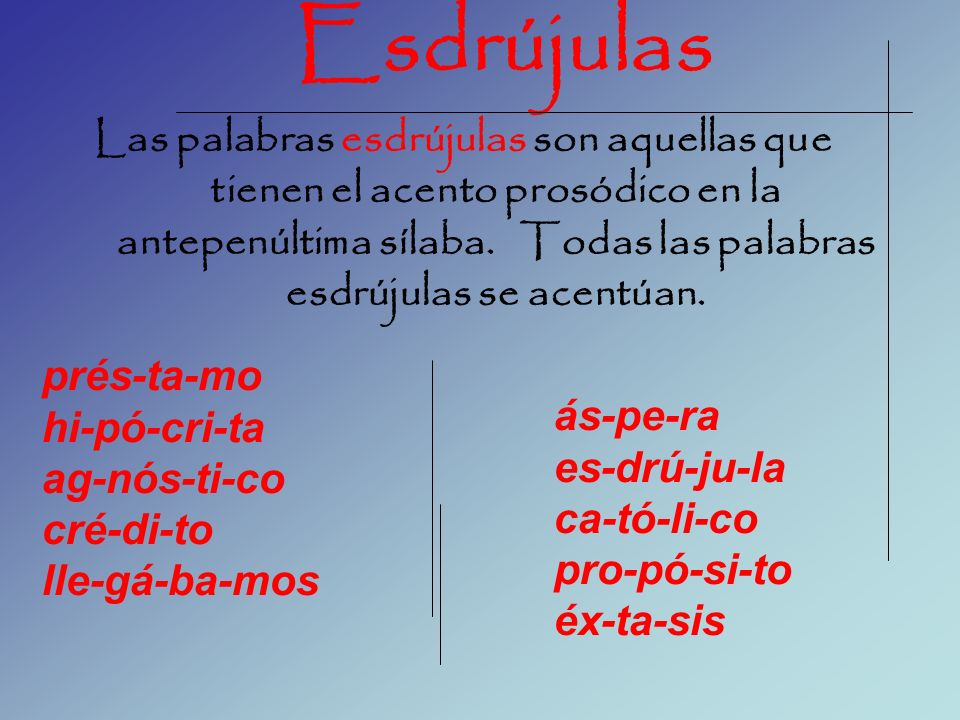
A little techincal point here, whenever you hear a word that is an "esdrújula" which is a word of three syllables or more where the stress is heard on the antipeultimate syllable, (that's the one before the next-to-the-last syllable) it will "ALWAYS" have a written accent.
And "léalo" is definitely "esdrújula." (So is esdrújula, by the way.  )
)
The "general" rule is that the tilde is used to preserve the original emphasis of the command. It's also interesting that in Argentina the normal rule with tildes & commands seems different... you'll notice an almost "italian" sounding emphasis with commands; but it's just following the rule of voseo. The key with these examples is that tildes in these combos are used to keep command verb sounding the same.
Imperative/command - llamar
Tú - llama --- Llámanos en cuanto estés listo. --- Without the tilde it would sound like its voseo cousin.
Vos - llamá --- Llamame en la tarde por favor.
You may write and pronounce it veálo (/be'alo/) but everybody would stare at you wondering what are you trying to say.
Not for being repetitive, but
véalo = vé(3)-a(2)-lo(1) ---> esdrújula = es(4)-drú(3)-ju(2)-la(1)
Back in the 1930s, Sister Margarita, one of my mother's teachers in elementary school made them write: "en el tiempo de los apostoles vivían unos barbaros que se subían a los arboles y se comían los pajaros" (and pronounce it: "en el tiempo de los apostóles vivían unos barbáros que se subían a los arbóles y se comían los pajáros" until they learned it for good)

















