Plurals and English Oddities
Every now and then a comment surfaces about how learning to use the plural can be so frustrating in English, because there are so many exceptions and oddities.
I came across this tweet today which nicely illustrates the issue:
penjamin.mp3 (?@upsidedowntrash?) [Shark Tank]
- Me: [holding tiny top] It's called Blouses For Mouses™
- CEO: The plural of mouse is mice.
- M: Ok, Blice for Mice™ then whatever
Cada tanto surge un comentario sobre lo frustrante que puede ser aprender el uso del plural en inglés, porque hay tantas excepciones y rarezas. Hoy me encontré el tuit que copié más arriba, que ilustra muy bien el problema.
9 Answers
One of the things that gave me trouble was the more than 230 irregular past participles. I managed to learn about 200 of them, the rest aren't that important. These past participles are so goofy that many Americans don't know them and can't tell the difference between the past tense and the past participle. I have heard do many Americans say things like "I seen him" yesterday instead of "saw." How about "He has went." instead of "He has gone"
I could probably post a few more of these, but I'm sort of in a hurry. I have to write a big long complaint letter to the IT department at my school. The management wants us to do so much instruction and exercises, showing videos and such,via computer, then give us a computer that doesn't work. It's a good thing I can teach without a computer. I can even teach without recourse to a textbook, so it wouldn't slow me down except for the fact that there is no academic freedom here. All the Spanish teachers are in lockstep and have to do as the department says. ¡Qué estupidez!
Don't complain. English plural is not that hard.
man, woman, child, tooth, foot, mouse, louse and how many more are irregular? Not so many, it's not a real issue.
Well, fish is kind of discussable, sheep and those coming from Latin like phenomenon etc.
I consider plural not very hard. I might be wrong.
Phrasal verbs are extreeeeeeeeeeeeeeemeeeeeeeeeely difficult.
how many more are irregular? Not so many, it's not a real issue.
Me, I'm not complaining. I know most of my irregular plurals well enough. I'm just pointing out one of the elements that English learners may find exasperating.
However, this page lists 100 irregular plurals... and that's not the whole list.
Ah, this page is helpful. For those who love rules, here is how most of them work. Para quienes les gustan las reglas, aquí se muestra cómo funcionan la mayoría de los plurales irregulares.
Spanish seems far better structured and organised than English. It's only when I started learning Spanish that I realised just how crazy English can be!
I have a real anecdote with fish.
A boy went to a bilingual private school in our country. His grandparents paid the fee monthly. It was a present . Once the boy came saying or singing something about "fishes". His grandfather had attended a bilingual school along time before. He was taught that fish was invariable
To make a long story short, the kid was taken out of this school and sent to another.
Moral of the story
Don't have a grandfather who pays for your school or if not he shouldn't have studied English with a narrow-minded old method.
Bigote said: I think that "mouses" is correct
Have a look at this article :
Mice vs. mouses For the small device used to guide the cursor on a computer display, many dictionaries endorse both mice and mouses as the plural form, and few usage and style guides offer a definitive preference (exception: AP says “mice”). We assumed mouses was standard for the computer device, but we were wrong. Searches of current news articles reveal 31 instances of “computer mice” to only seven of “computer mouses.” And on the whole web, Google finds nearly 10 million results for “computer mice” to only around 200,000 for “computer mouses.” These ratios might be skewed by a greater tendency to use “computer” with “mice” to avoid confusion with the rodent. But this may be partially offset by instances of mouses as a simple-present verb (e.g., she mouses over the image). In any case, we can safely say that mices prevails by a large margin.
how many more are irregular? Not so many, it's not a real issue.
I hope you didn't mean irregular verbs?
Especially if you want to really know them all...I doubt any native speakers know words like :
begird, engird, flyblow (wow, this one really made me laugh  )
)
Anyway, this page lists 616 Irregular Verbs....who said there weren't that many?
[English Irregular Verbs](http://www.actionwins.ca/Documents/List of 616 English Irregular Verbs.pdf)
I think that "mouses" is correct. I think it follows the same rule as "fish" and "fishes".
Speaking in plural, "fish" means several fish of the same species. "Fishes" means several fish of different species. I believe "mice" and "mouses" follows the same rule.
A perch and a pike are "fishes". Two perch or two pikes are "fish."
I did not research this. I'm in a hurry to get to an appointment.
Other examples are "moose" and "mooses".
English plural is not that hard.
A slightly contradictory statement Pol  We'd normally say "English plurals are not that hard" or, in a more formal scholarly form, "The English plural is not that hard."
This is a little off topic from plurals, but we can also do odd things with collective nouns:
The team is / are happy with its / their result. The staff has / have etc. It can vary stylistically or by dialect.
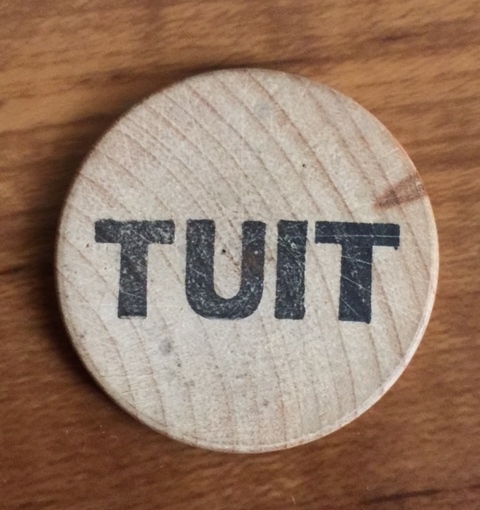
By the way, and completely off topic, I see the Spanish for "tweet" is "tuit." We have a "tuit" in English as well.