
The struggles of being bilingual
If you think learning Spanish is tough, take a look at this fun little video about the challenges of growing bilingual: Struggles of being bilingual
7 Answers
My children are trilingual (English, Spanish, Mandarin Chinese) and I can see their struggles... but I also see their amazing improvements too. Yes, they make ocasional mistakes and they sometimes can't find the right word or structure, but their improvements are steady, and they get better and better by the week, quite often shocking you with their fluency and mastery of colloquialisms. Spanish people never speak slower when talking to my children, and Chinese people don't either... after they realise communication is reasonably fluent, so who cares how native-like they are? Both of them can fool a Spanish speaker or a Chinese speaker for a short while (eventually, something gives them away), and they both understand full speed natural native speech with slang.
I have never spoken to my children in any language other than Spanish, and both of them always speak to me in Spanish. They always speak to Chinese people in Chinese ALL the time, even if they try to speak to them in English.
I wish I had "struggled" like my children when I was their age!
My best friend in Bolivia is a German. He married a Bolivian about 16 years ago. She did not speak German and he did not speak Spanish, so they spoke English with each other and still do.
They have 3 children who learned Spanish with their friends and their mother and German at their first school and from their father.
Both parents encouraged them to learn English with them and at school - even when they were small they would visit me and practice their English.
I heard once when my friend scolded one of the boys in German when he was about 9; his mum asked him what his father had said, he said in English "You will have to learn German mum."
Another time my friend and his daughter were in a taxi in England and he was discussing something with her in German and she was answering in Spanish and when he couldn't understand her she switched to English.
They are all fully tri-lingual now and never ever regretted the effort they made.- It was always just fun to learn. It was great for me see it happen.
Not a problem I have, but I do sometimes come up with the French word instead of the Spanish despite being a native English speaker and having learned French eons/ donkey years ago. I remember saying mercredi instead of miércoles only last month. I suppose I ought to be grateful I got the right word but wrong language!
I enjoyed the video I hadn't thought of the problems. Growing up bilingual friends could only speak their second language at home ( I had friends with a Greek/ Polish or Spanish mother) these languages were not widely available outside the home. If they had lived in London there were areas of the city where people from different countries chose to live near each other.
Thanks for posting.
We are bilingual, gekko, you are "more" bilingual than I am, but anyway 
It takes a lot of work, a lot of sacrifice, pronunciation practice, you want to sound like a native speaker...very hard and it takes time.
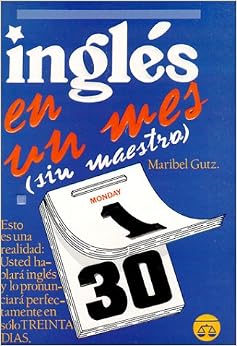
don't expect to be "bilingual" in a month...like those who say "learn English/Spanish/German in a month". Don't believe that crap, it simply doesn't work.
I think they are not really bilingual Spanish is a language they understand very well but they don't know it as well. They are like very , very advanced Spanish students probably.
Am I wrong or all except one of the girls speak American English very well?
Has anyone heard the presenter of the TV program "El Palenque". Would you say he is really bilingual?
In an open society like the one they live in, it's very hard not to succumb to being a good English speaker especially if they have gone to school and high school etc in the US.
Here when I was a kid there were many European immigrants. Most kids understood their parents mother tongue and could speak a little but their Spanish was far better, absolutely like a native Spanish native speaker.
Learning to be (or becoming) billingual is certainly a process, not to mention a challenge, and it is true that nothing worth learning in life ever comes easy! ; ) It takes hard work, loads of practice, persevence when times get tough, and a willingness to learn from your mistakes, and boy do I know about that, I have made loads of them since I started learning Spanish (not to mention the ones I have made in French and other languages over the years!)
The fastest way to make progress of course is to live among the natives, as I am sure that the best research has proven time and again that immersion is the most effective way to learn a language! However, for many people like myself financial and time constraints make that impractical, so we just have to do the best that we can and make the most effective use of the resources available to us!
The outrageous and unjustified claims that some companies make in suggesting that you (any person) can learn to become fluent in a language in just a matter of weeks, or achieve a very level of competency in speaking it are wildly exaggerated and simply not true, as Heidi rightly says!
From what I have heard and understand to be true, it takes/would take most people somewhere between 1 and 3 years to reach (ie: achieve) a very effective level of competency or proficiency in Spanish (C2 or at least C1) while living among Spanish-speaking natives in a fully immersive environment! I am open to correction of course, as this is just an estimate and everyone is different! A person with a real gift for learning languages could probably reach an extremely high level of competency in a much shorter time within 1 year to 18 months or even less, if that individual were able to learn very quickly!
It just shows that the best time to learn a language is usually when you are a child as children can generally absorb new information like a sponge,much faster than adults, and just naturally imitate the language of their parents and others with whom they relate and communicate on a daily basis! They make it seem so easy! (If only ....! ) Lol Very young preschool children under 5 don't normally consult grammar books lol or take time to learn conjugations by heart; they just practise what they know because they usually enjoy making friends and communicating....Perhaps we could learn something from them!
The way we approach learning a new language as adults is considerably different from a child ...perhaps we make it harder on ourselves?!
I really enjoyed watching the video ...it was informative and insightful in a funny way that helped me to gain a slightly better understanding of the problems/challenges facing truly billingual people! It was very short so there was a limit to how useful it could be, but I'm glad that I watched it!
Thank you very much for posting it, Gekko! ; )
Becoming bi-lingual was not a big deal for me, as it really isn't a big deal for Latino kids born into a bilingual culture. I was bi-lingual when I arrived. My two languages were Spanish and French. My mother is Québequoise, and my dad Spanish.
After arriving in this country, I started my English learning by mixing with Mexican-American kids in the 4th grade. I thought the Spanglish that they spoke was sort of cute, but then I started listing to the Gringo kids who I thought would teach me the real thing. I more or less "inhaled" the English language, proper Valley girl accent and all. I listened really hard to my teachers and took lots of notes. In about a year I had caught up with my English speaking peers.
As I did not have a Spanish surname, (My dad has a Hebrew family name), most people assumed that I was a Gringa, and were quite surprised when I could give good answers, with an authentic accent in my high school Spanish classes.
In college I continued and pursued a degree with a Major in Spanish and a double minor in French and English. I have even taught English at the high school and college level.
Unfortunately my French has decayed. What you don't use you lose. I still have the pronunciation, but my vocabulary and grammar are sadly lacking.

















