
La Palabra Del Día "observar"
observar ( ohb-sehr-BAHR )
(verb) to see, to watch, to observe
Welcome to La Palabra Del Día

There are many native English speakers here, most of us can offer great suggestions to the English sentences. I will do my best to go through them all, too. For the Spanish sentences, edit your posts according to the native Spanish speakers suggestions. Use today's Word of the Day in your own Spanish sentence (and include the English translation as well). Try to use the word in a completely new way and vote on the sentences you like best. The winner will be chosen based upon the correct use of the word as well as the number of votes.
Guidelines:
Write sentences at least 5 words long, but don't write a paragraph either. Write your Spanish sentence, but include the English translation as well. Make the corrections suggested by other users and moderators in the comments section (try not to use personal pronouns unless absolutely necessary). Use your own words! (Don't use a translator, copy from a book, use song lyrics, etc.) Please keep political, religious or personal statements to a minimum. This is a practice game.
How to post a picture

Examples:
1: Se puede observar la puesta del sol desde la orilla del lago.
You can watch the sun go down from the lake shore.
2: El acantilado es un buen lugar para observar las aves de presa que habitan la zona.
The cliff is a good place to observe the birds of prey that live in this region.

11 Answers

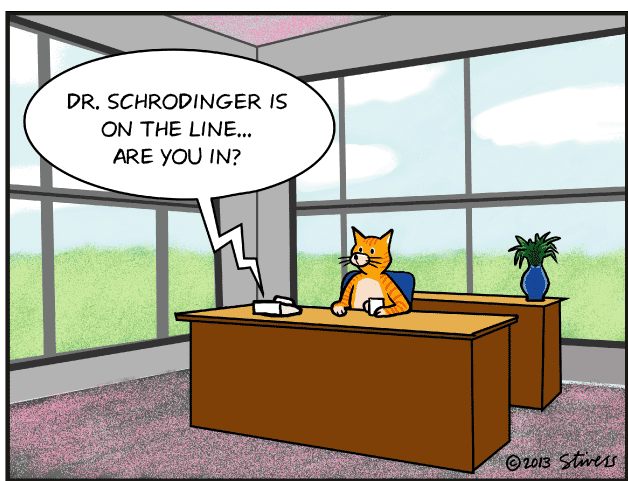
La física cuántica nos dice que es imposible observar algo sin afectarlo.
Quantum physics tells us that it is impossible to observe something without affecting it.
Uno de los deberes de un/a profesor/a es poder observar a los estudiantes para asegurar que no están engañando en las pruebas.
One of the duties of a teacher is to be able to observe the students to be sure that they are not cheating on the tests.

Cuando observo a mi vecino en mi jardín él parecer sospechoso.
mirar
When I observe my neighbour in my garden he looks suspicious.
Especialmente mientras está comiendo mi fruta.
Especially while he is eating my fruit.

Algunas personas están en el Consejo de Seguridad de las Naciones Unidos para observar, no para participan en los actos.
Some people are at the UN Security Council to observe, but not to participate in the proceedings.
Thanks for suggestion, Ray. 

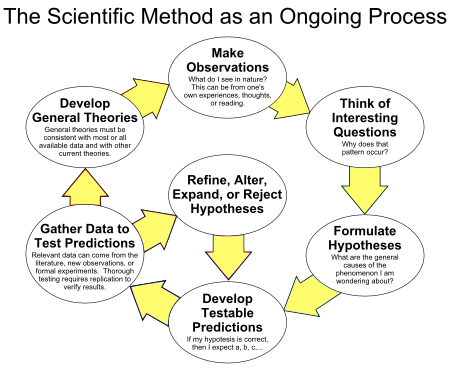
La base de buena ciencia es observar cómo algo es o sucede, formar una hipótesis sobre por qué es como eso o sucede en esa manera y hacer un experimento diseñado para determinar si la hipótesis lo explica correctamente.
The basis of good science is to observe how something is or happens, form a hypothesis about why it is like that or happens in that manner and do an experiment designed to see if the hypothesis explains it correctly.
It was hard to observe the concert because the man standing in front of me made a better door then window.
Es difícil observar el concierto porque el hombre de pie delante de mí hecho una mejor puerta luego la ventana.
Corrected Spanish:
Era difícil observar el concierto porque el hombre de pie que estaba delante de mí funcionaba mejor como una puerta que una ventana.
Thanks to Kenhuizenga for corrections.

No es dificíl observar la moda de educación en los pueblos, es muy pobre. No hay maestros responsibilidades en la primera.
It is not difficult to observe the style of education in the villages, it is poor. there is no responsible teachers at first.

Un buen detective observa las huellas con métodos diversos, pero un perro detective tiene la ventaja de su buen olfato.
A good detective observes the traces with different methods, but a detective dog has the advantage of his good sense of smell

Los Mayas observaron los movimientos de las estrellas y los planetas durante siglos.
The Mayans observed the movements of the stars and planets for centuries.
Con gerundio de bajar:
Cada año cientos de miles de personas observan el Año Nuevo visitando Nueva York para ver la Bola de Fin de Año bajando en Times Square.
Con infinitivo de bajar:
Cada año cientos de miles de personas observan el Año Nuevo visitando Nueva York para ver bajar la Bola de Fin de Año en Times Square.
With present participle of "to drop":
Every year hundreds of thousands of people observe New Year's by visiting New York in order to see the ball dropping in Times Square.
With bare infinitive (meaning without the "to") of drop:
Every year hundreds of thousands of people observe New Year's by visiting New York in order to see the the ball drop in Times Square.
Explanation. Normally, when a new subject, in this case "the ball" is introduced in Spanish you must introduce the new subject with that (que) in a new phrase. With verbs of observation such as ver (to see) you can write it without using a new phrase by using either the gerundio or the infinitivo. The rules for being able to do this in Spanish are somewhat restrictive, however, and I am not sure if my above sentences comply. I would appreciate comments. Are my sentences OK? I feel fairly confident about the first one, but less confident regarding the second. Thanks.
Looking at my Spanish grammar book by Butt & Benjamin they give the following example of correct usage of the infinitive:
Vemos llegar el avion. (We saw the plane arrive)
Based on this, I think my phrase
para ver bajar la bola (to see the ball drop)
is OK grammatically. At least I don't know why it wouldn't be.

Padres cuidadosos observan a sus hijos para ver lo que necesitan en su desarrollo.
Careful parents observe their children to see what they need in their development.

















