Home
Q&A
Mistake on the Spanish Grammar Page

Mistake on the Spanish Grammar Page

2
votes

I just thought that whoever runs this website might want to know that on the Spanish Grammar page, on the section cardinal numbers 0-100 it says

Conjugate Tener to the subject to indicate the number of years a person “has.”

Yo tengo veinticuatro años. (I am twenty-four years old.) Mi hermana tiene treinta y nueve años. (My sister is thirty-nine years old.)

Though in English you wouldn't be looking for the number of years a person has, you would be looking for how old they are. A lot of Spanish speakers use this phrase, though it isn't used in English. I am not sure if you guys just want to correct it, just a thought.

1347 views
updated Sep 15, 2016
posted by k_nelson
We in the forum do not control the content- but I think that that is why the quotes are there, to indicate that that is not standard English. :) - bosquederoble, Sep 14, 2016
That is what I figured, I just didn't know were else to post it. Yes, that would explain the quotes. - k_nelson, Sep 14, 2016

2 Answers

3
votes

All Spanish speakers (that speak it correctly) use "tener" when talking about age.

To us it's stupid to say I am seven years old. I have seven years of age is what we say in Spanish. The French and also the Italians use this type of phrase. Tengo siete años de edad. Most of the time we drop "de edad."

Expressions like this are called "idioms" or "idiomatic expressions" Languages abound with them.

There is NO mistake in this grammar page. There may be mistakes, but not in this case.
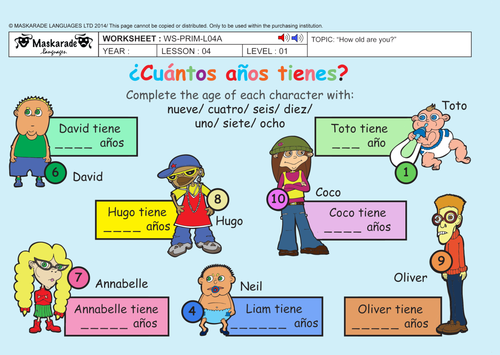
enter image description here

updated Sep 15, 2016
posted by Daniela2041
Yes, though should the English translation be translated that way? I am not talking about the Spanish translation, just how they say "how many years are you". - k_nelson, Sep 15, 2016
Right, the English is incorrect. - rac1, Sep 15, 2016
They were merely demonstrating the Spanish usage of have/has. When it is put as an example of the literal Spanish, it is not a mistake. I do this every day in my classes. - Daniela2041, Sep 15, 2016
It like, in English we say: I wash my hands. In Spanish that becomes: "Me lavo las manos." Literally, "I wash myself the hands." It is an illustration in English of the way we do things in Spanish. There are thousands more. - Daniela2041, Sep 15, 2016
Typo: should be "It's like" - Daniela2041, Sep 15, 2016
I see, got cha. :) Thanks - rac1, Sep 15, 2016
:) - ian-hill, Sep 15, 2016
Thanks rac1, that is all I was saying. It isn't that big of a deal, I just realized that the English was incorrect. - k_nelson, Sep 15, 2016
No problem Keziahjnelso. :) - rac1, Sep 15, 2016
2
votes

Conjugate Tener to the subject to indicate the number of years a person “has.”

Has is in quotation marks as a way of pointing out that in Spanish we look at the situation differently: A person has a number of years. The whole point is that, as you say, "in English you wouldn't be looking for the number of years a person has."

updated Sep 15, 2016
edited by jtaniel
posted by jtaniel