
La Palabra Del Día: "mascarón de proa"
mascarón de proa ( mahs-kah-rohn' deh proh'-ah )
noun ( figurehead )
Welcome to La Palabra Del Día

There are many native English speakers here, most of us can offer great suggestions to the English sentences. I will do my best to go through them all, too. For the Spanish sentences, edit your posts according to the native Spanish speaker's suggestions. Use today's Word of the Day in your own Spanish sentence (and include the English translation as well). Try to use the word in a completely new way and vote on the sentences you like best. The winner will be chosen based upon the correct use of the word as well as the number of votes.
Guidelines:
Write sentences at least 5 words long, but don't write a paragraph either. Write your Spanish sentence, but include the English translation as well. Make the corrections suggested by other users and moderators in the comments section (try not to use personal pronouns unless absolutely necessary). Use your own words! (Don't use a translator, copy from a book, use song lyrics, etc.) Please keep political, religious or personal statements to a minimum. This is a practice game.

How to post a picture
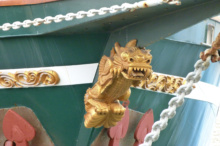
Examples:
1: El barco tenía un mascarón de proa en forma de dragón.
The ship had a figurehead in the shape of a dragon.
2: El relámpago hizo que el mascarón de proa se prendiera en fuego.
The bolt of lightning set the figurehead on fire.

6 Answers
A veces, cuando has acabado de comprar un nuevo barco y todavía no has tenido tiempo para comprar el perfecto mascarón de proa, es necesario contratar temporariamente a alguien para hacer el papel.
Sometimes, when you have just bought a new boat and still have not had time to buy the perfect ship's figurehead, it is necessary to hire someone temporarily to fulfill the role.


Los mascarones de proa son figuras decorativas , relacionados a personajes mitológicos o religiosos para ahuyentar a enemigos y tempestades y para identificar el barco.
The figureheads of the ships are decorative forms, related to mythological or religious characters to ward off enemies and storms and to identify the boat.
En mi familia mi mamá no era la mascaró por poder.
In my family my mother was not the figurehead for power.

Hoy en día la reina de Inglaterra no tiene ningún poder de verdad, es meremente un mascarón de proa.
Nowadays the Queen of England doesn´t have any real power; she is simply a figurehead.
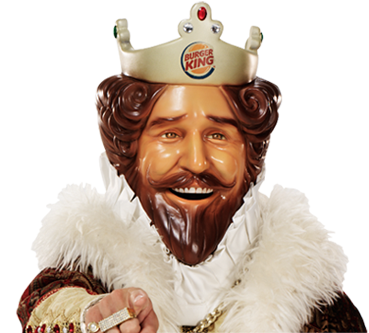
Este rey no es más que un mascarón de proa para la venta de comida rápida.
This king is merely a figurehead for selling fast food.
¿Porque el subjuntivo aquí? " "El relámpago hizo que el mascarón de proa se prendiera en fuego."
¿Es "se prendió en fuego" correcto?

















