
La vida te me la llevé - help with translation please
In reading up on the placement order of reflexive (R), indirect(I) and direct(D) pronouns I came across these two examples intended to show that the order of the pronouns is not necessarily R-I-D 100% of the time.
La vida te me la llevé.
La vida te me la llevaste.
I can see the demonstrated order of the pronouns and I understand the conjugation of the verb in these examples is First Person Singular in the first, and Second Person Singular in the second, but what do they actually mean? The best I can get to is;
- The life, I took it for/from/to you.
- The life, you took it for/from/to me.
My translations seem to sadly lack the poetic incisiveness I have come to expect from Spanish expressions so I am hoping one of you can provide something more meaningful. And maybe explain the sense of 'llevar' in this context.
6 Answers
To me, the first example doesn't make any sense.
The second example means "Life, you took it from me" or "My life, you took it away".
Sometimes, dative pronouns are used instead of possessive ones, like:
- "Me cortó el pelo" ("He cut me the hair") = "He cut my hair" ("Cortó mi pelo")
te = pronominal (from llevaste -> past tense of llevarse)
me = dative pronoun (my)
la = direct (life)
La vida te me la llevé.
La vida te me la llevaste.
The first sentence does not follow the "RID" order as "yo" is the subject.
The only English I can get out of it is: I took life away from you (for myself) Or "Life, I took it away from you (for myself.)
The second one DOES follow the "RID" order and the English goes something like this:
You took life away from me (for yourself). Or life, you took it away from me (for yourself.
Llevarse is used when you are taking something away for yourself.
EX. When you order a hamburger or a taco the empleado might say, "Se lo lleva?" as opposed to eating the item where you bought it.
Note: I don't usually see, hear, or use constructions like this. This is just a logical translation of what has been given.
Fascinating subject to me. I have never had success with sentences that have all 3 types of pronouns around one verb, so I max out at 2, at least if I only have one verb to work with.
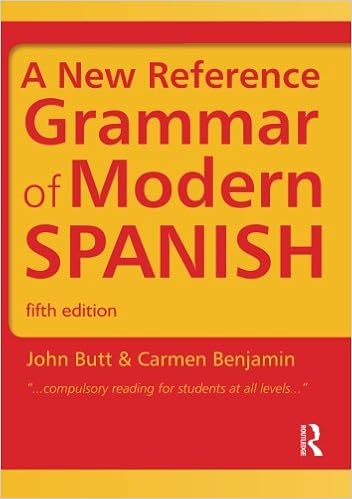
Benjamin and Butt do not use the RID order, instead use this:
11.12 Order of object pronouns
- Se
- Te/os
- Me/nos
- Le/lo/la/les/los/las
I once challenged someone to come up with a sentence for me that would violate either this order or the RID order.
Interestingly, your sentences follow the Benjamin and Butt order.
• La vida te me la llevé.
• La vida te me la llevaste.
Now, even more interestingly 0bito has rejected the first sentence, which would violate RID (as the sentence is conjugated to match me- making the second pronoun the pronominal one).
He accepts the second. But that one does not violate RID:
te me la llevaste
As he notes;
te = pronominal (from llevaste -> past tense of llevarse)= R
me = dative pronoun (my)= I
la = direct (life)= D
La vida te me (de) la llevé.
Maybe, this is it? Only way it makes sense to me, don't know about the grammar?
The life you took me from.
Well, maybe I'm just romantic, but I thought the second sentence went "you brought me life." One of the meanings on the SD translator is "to bring." The first sentence brings to mind the movie "Young Frankenstein " with the doctor screaming at the monster, "I brought you life!"
In summary, context would help immensely.

Thanks for your comments everyone. For those looking for the context it was a response from someone to a question regarding the RID order for pronouns and how many pronouns can be used in a sentence. The full statement was:
"It is very possible to use three pronouns in sequence: la vida te me la llevaste and the order is not always as indicated here (ie RID). The "rule" given works 95+% of the time, but doesn't handle all situations. Consider swapping the first and second persons in the triple object example: la vida te me la llevé is the correct form, but it's IRD, not RID. – guifa Jul 23 '14 at 4:18"
The link to the page where it appeared is;
http://spanish.stackexchange.com/questions/315/what-is-the-correct-order-of-object-pronouns

















