
Passive voice - identifying the agent when using the 'se' form
I love the passive voice in English (probably using it more often than is wise) so am pleased to see it used so often in Spanish in the books I am reading and am dying to overuse it myself. I have read the page on forming the passive where it says, in part;
The formula ser + past participle (+ por + agente) or se + 3rd person is used to create the passive voice.
It then goes on to provide some examples. My question is in two parts:
1) Can the agent be identified when using the latter formula, se + 3rd person (+ por + agente), or is it only used when the agent is not identified? Se escribó el libro en español por mi profesor. Se establecieron las colonias hace 200 años por los ingleses.
2) It seems that I have only seen the latter form used with the word order as verb first then the subject. Is this mandatory, usual, or totally elective? Se establecieron las colonias hace 200 años. Las colonias se establecieron hace 200 años.
4 Answers
Hi, I'm not a native speaker, but I will share my knowledge with you to the best of my ability.
- When using the passive se, the doer of the action is never identified. When the person or thing performing the action is unknown, or you don't want it to be known, you use the passive se. You use ser+past participle+por+agent when you do want to acknowledge the person doing the action.
El libro fue escrito por mi profesor/por alguien/por mi madre/etc.
Vs.
Se escribió el libro en 1920. (Nothing is known about who wrote it; it could have been a monkey for all we know).
- Generally when using the passive se, the word order is se+third person indicative or past+the thing that is or was done.
Well, that's my two cents from what I learned in college. 
I think the establecerse is just a reflexive ' se'.
Overall the Spanish uses the passive much less than in Engsish and few of all the trillions of 'se' that occur are passive. But some are. You're abrave woman if you want to use it more than necessary!
Sorry, this is not very helpful to you, I'm afraid.
The "other" passive is when you say "The book was written by José García"
El libro fue escrito por José García,
Las Américas fueron descubiertas por Cristóbal Colón, en 1492.
(The Americas were discovered by Christopher Colombus in 1492)
In this case you don't use "se" but you do mention the agent.
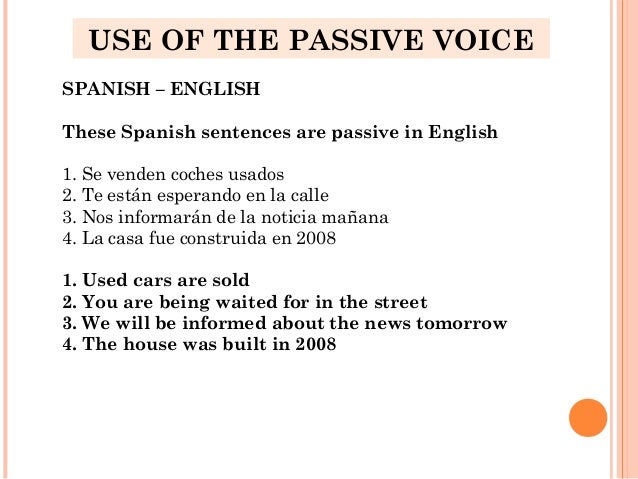
Here's a chart with a few more different kinds of passive.
Four questions regarding the Passive Se from my Spanish text book. Any help is much appreciated .....
1) Se prohibe fumar
How do I know whether to read this as "one is forbidden to smoke" or "to smoke is forbidden" ? Clearly they mean the same thing but when I'm reading Spanish is there a way of telling whether to translate as though the subject has been generalised to "one" (Impersonal Se) or has been removed altogether (Passive Se) ?
2) El museo se cierra a las seis.
My book says this should be interpreted to mean "the museum is closed at six" but I don't understand this construction at all. Why is it necessary to say "the museum closes itself at six" rather than simply "El museo cierra a las seis" ?
3) The example above seems to contradict an earlier very helpful post in this thread by "cmusab" (I think) indicating that the correct construction should be "Se cierra el museo a las seis". Are both okay or is one better than the other ?
4) If I use Google Translate "English to Spanish" and I enter "the museum closes at six" then it throws out "El museo cierra a las seis". Phew, at least I got that right :o) But if I just enter "the museum closes" it throws out "se cierra el museo". ??? So just the addition of "at six" not only moves the "el museo" bit to the front but also introduces the notion of reflexivity via "se" ..... ("itself, it closes the museum"). It just seems so weird to me.
Any help is very much appreciated.

















