
La Palabra Del Dia: "acabar"
acabar ( ah-kah-bahr' )
verb ( to end, to finish )


There are many native English speakers here, most of us can offer great suggestions to the English sentences. I will do my best to go through them all, too. For the Spanish sentences, edit your posts according to the native Spanish speaker's suggestions. Use today's Word of the Day in your own Spanish sentence (and include the English translation as well). Try to use the word in a completely new way and vote on the sentences you like best. The winner will be chosen based upon the correct use of the word as well as the number of votes.
Guidelines:
Write sentences at least 5 words long, but don't write a paragraph either. Write your Spanish sentence, but include the English translation as well. Make the corrections suggested by other users and moderators in the comments section (try not to use personal pronouns unless absolutely necessary). Use your own words! (Don't use a translator, copy from a book, use song lyrics, etc.) Please keep political, religious or personal statements to a minimum. This is a practice game.

How to post a picture
Examples:
1: No puedo creer que el 2015 ya haya acabado.
I can't believe 2015 has already ended.
2: Si no vas a acabar tu postre, ¿me lo das?
If you aren't going to finish your dessert, may I have it?

15 Answers
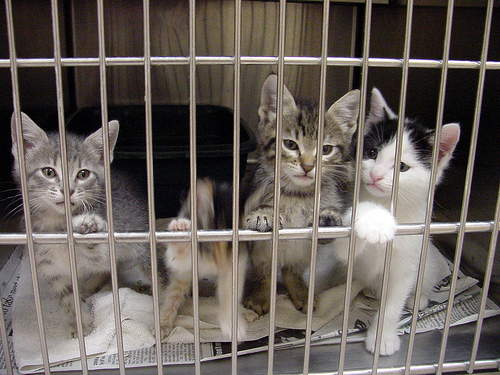
Lo siento, se nos acabaron los cachorros. ¿No quisieras un gatito?
I´m sorry, we are out of puppies. Wouldn´t you like a kitten?
Natalia: ¿Vas a caminar en la playa conmigo?
Alberto: Sí, querida, después de acabar de comer.
Natalia: Would you go for a walk on the beach with me?
Alberto: Yes, darling, after I finish eating.

Lamentablemente hay conexiones cuales pueden acabar con la vida de uno de participantes.
Unfortunately there are connections that can end the life of one of the participants.
Acabaron la escuela secundaria el año pasado.
They finished secondary school last year.

Estoy pensando en mis resoluciones para el año nuevo pero la lista ya se ha hecho tan larga que nunca voy a acabar con ella. Ahora se ve algo como la lista de compras antes de las Navidades; Vino, café, chocolate, carne rojo pero esta no es la lista de compras, estas son las cosas con las cuales debería de acabar, que triste.

I'm thinking about my New Year's Resolutions but the list has now become so long I'll never get to the end of it. It's now looking something like the shopping-list before Christmas: Wine, coffee, chocolate, red meat, but this is no shopping list , these are the things I ought to give up, how sad.
Te lo dije anoche, se acabó!
I told you last night, it's over!

Aprendí acerca de acabar mientras se ve Extra Spanish.
I learned about acabar while watching Extra Spanish.
Aún no he acabado la redacción. / I still haven’t finished the essay.
La función acaba a las doce. / The show finishes at twelve.
Acaba en punta. / It ends in a point.
¿En qué acaba, en "d" o en "z"? - What does it end in – ‘d’ or ‘z’?
Tengo que acabar de lavar el coche. / I must finish cleaning the car.
Acabo de verle. / I’ve just seen him.
Acabo de avergonzar mi mismo de nuevo en Spanishdict, así que voy a encontrar mi libro de texto de español para estudiar.
I just embarrassed myself on Spanishdict again, so I'm going to find my Spanish textbook in order to study.

We had just finished eating lunch when our friends arrived from Sydney, Australia. They apologised for arriving late, but explained to us that their flight had been unavoidably delayed by four hours because of (or due to) a security threat! We told them that we were just pleased to see them again and very relieved that they had all arrived safely! 
Habíamos acabado de terminar comiendo almuerzo cuando llegamos nuestros amigos de Sydney, Australia. Se disculparon por llegar tarde, ¡pero nos explicaron que su vuelo había sido detenido inevitable de cuatro horas a causa* de una amanaza de securidad! ¡Los dijimos que nos gustó verlos y nos sentimos muy aliviado que todos de ellos habían llegado sin novedad!
o debido* a
Editor's note/s:
1.I was not sure if I needed the definite article el before almuerzo but decided on balance of probability it was not needed. I hope I was right!
2.I was also unsure if I should have used the subjunctive to translate the last sentence: We told them that we were just pleased to see them again and very relieved that they had all arrived safely. I didn't think and still don't think it is needed as I am simply stating what happened (indicative used for facts and statements) rather than what we wanted them to do!
Corrijan mi español si es necesario, por favor 
Algunos hombres nunca saben cuando un asunto del corozón se va a acabar.
O cómo acabar con ella.
Some men never know when an affair of the heart is going to end.
Or how to end it.

Acabo de ponerle un "post" de felicitaciones a Katydew.
I just posted a congrats post for Katydew.

 Espero que mis problemas hayan acabado al final del año pasado y mi vida viaje en un nuevo camino en el año nuevo.
I had hoped that my problems were gone at the end of last year and my life would travel in a new path in the new year.
Espero que mis problemas hayan acabado al final del año pasado y mi vida viaje en un nuevo camino en el año nuevo.
I had hoped that my problems were gone at the end of last year and my life would travel in a new path in the new year.
Acabo de dar cuenta de que todos están de vacaciones, dejando la ciudad vacía .
I have just realized that everybody is on holiday, leaving the city empty.

Mi casa ha estado llena de personas , incluyendo cinco niños pequeños, durante la semana pasada. No he sido capaz de contribuir a SpanishDict. Sin embargo, hoy es el día de la liberación. Los últimos visitantes acaban de irse. Ahora puedo volver a estudiar español.
My house has been full of people, including five small children, for the past week. I haven't been able to contribute to SpanishDict. However, today is the day of liberation. The last visitors have just left. Now I can go back to studying Spanish.

La historia era larga y complicada pero al fin acabó bien.
The story was long and complicated but finally it had a happy ending.

















