
The Arabic Influence on the Spanish Language .
The Arabic Influence on Spanish.
From an SD blog
In 711 C.E., Arab armies began the conquest of the Iberian Peninsula. With the conquest, the* hispanomusulmanes*, as they're called in Spanish, brought the Arabic architecture, art, and of course, the language. Over time, Arabic expressions mixed with old Spanish vocabulary to become the Spanish dialect that most Spanish-speaking countries use today: castellano (Castilian Spanish).
Even as the Spanish kingdom expelled the Arab empire from the region in 1492, Castilian Spanish retains approximately 8,000 words with Arabic origin to this day. After Latin, Arabic has made the greatest contribution to the Spanish language.
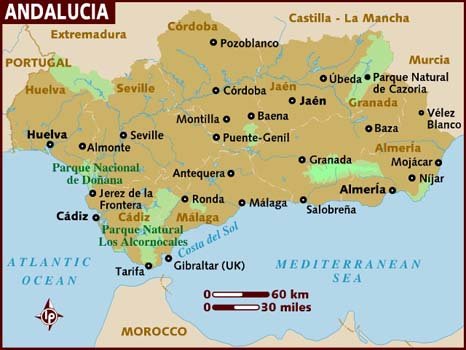
Traveling through Spain, it is almost impossible to avoid the name of a place or region that is derived from Arabic. To name just a few:

Something interesting to note about this map is that the majority of the Spanish locations derived from Arabic are limited to the central and southern regions of the country, representative of how the empire was unsuccessful in conquering the entire peninsula. However, the Arabic influence on the Spanish language extends past the names of modern cities and regions. Perhaps the easiest way to see this influence in Spanish is in the simple words spoken every day. Here are the top 10 Spanish words with Arabic origin:
1. Ojalá
One of the words well-known to come from Arabic,* ojalá* means "hopefully" in English and comes from the Arabic expression: "wa sha allah" which means "should God will it."
2. Usted
This next word, usted is interesting because the word itself is derived from the Spanish expression "vuestro merced", but in fact is phonetically similar to the Arabic word for doctor/professor:* ustadh*.
3. Hasta
Meaning "until" in English, hasta comes from the Arabic word hata, which is a preposition with essentially the same meaning as hasta.
4. Azúcar
**Definitely the sweetest word on this list, azúcar, meaning "sugar" in English followed along the silk road and originates directly from the Arabic word* as-sukkar.***
5. Aceite
From the Arabic word, zayt, aceite translates to "oil" in English–not the fossil fuel, but the delicious liquid that comes from olives.
6. Almohada
Meaning "pillow" in English,* almohada* originates from the Arabic word al-mikadda which became *almuhadda *in Andalusian Arabic (the Arabic of the Iberian Peninsula).
7. Barrio
Barrio, which translates to "neighborhood" in English, comes from the Arabic word for outer limits (referring to a city): barri.
8. Alfil
Chess was a game loved by the Arabic empire, and it only makes sense that the Spanish word for chess piece,alfil, is derived from the Arabic word al-fil
9. Asesino
An interesting origin, with no direct correlation of meaning,asesino, meaning "assassin" in English, comes from the Arabic wordhashashin, meaning "hashish users
10. Adobe
One of the most popular construction materials under the Arab reign of Spain, adobe, the Spanish word for mud brick, originates from the Arabic word at-tub.
10 Answers
The only word I am fairly certain is of Arabic origin and still used in Spanish is ojalá, which means: I hope (to god) / if only...
ex: ¡Ojalá que todo salga bien! = I hope everything turns out all right /well!
I am not sure of the origen of this word, but it could be of Basque origen: izquierda = left
Another one is caixa = savings bank but this might just as easily be a Catalan word.
Open to corrections, as always  (Just, please be gentle with me if I make a mistake!)
How many words of Arabic origin can you add?

Una almohada es una pieza mullida en la que se apoya la cabeza durante el sueño.
There are hundreds more. Here's a link to a Wikipedia article. Many of them are no longer in current usage, though you will find them in the dictionary.
Arabic is my first language so stuff like this excited me. My favorite cognate is fulano(a). Most native aleakera are surprised when they find out it's originally an Arabic word! Factura is another great cognate!
I feel like "usted" is an abomination to include because "it is phonetically similar". It's phonetic similarity has nothing to do with it being derived from the Arabic language at all. If we based words on their phonetic similarity being equivalent to that of derivation, I'm sure there would be thousands more words that could be added to this list from twelve other languages.
On another note, the list on wikipedia, as Daniela stated, many of the words are no longer in current usage. I'm assuming she meant the Spanish words, but the other thing that I feel should be noted is that many of the words come from dead sub-dialects of the Arabic language. Meaning that you couldn't use the words today; people will just look at you weird.
However, to jump in on the fun, here is a list that I have accumulated through my studies of Arabic and Spanish with their English meanings (most of them are the same pronunciation or extremely similar AND they carry similar or the same meanings, so I won't bother to include transliterations):
aceite (m.) - oil
aceituna - olive
adobe (m.) - adobe
aduana - customs house
ajedrez (m.) - chess
alacena - cupboard, closet
alacrán (m.) - scorpion
albacora - albacore (tuna)
albahaca - basil
albañil - mason
albóndiga - meatball
albricias - good news!
alcalde - mayor
alcancía - coin bank
alcoba - bedroom
alcohol (m.) - alcohol
aldea - village
alfil - bishop (chess piece)
álgebra - algebra
algodón (m.) - cotton
algoritmo - algorithm
alguacil - sheriff
almacén (m.) - pantry/store
almohada - pillow, cushion
arrecife (m.) - reef
arroz (m.) -rice
atalaya - watchtower (if feminine), guard (if masculine)
ataúd (m.) - coffin, casket
atún (m.) - tuna
azar (m.) - random
azote (m.) - whip
azúcar (m. or f.) - sugar
azul - blue (note that Italian and French use a form of "blue", while Spanish and Portuguese use "azul")
babucha(s) - slipper(s)
balde (m.) - free, without cause, in vain
baño - bathroom
barrio- neighborhood
bellota - acorn
berenjena - eggplant
café (m.) - coffee
cero - zero
cuzcuz (m.) - couscous
dado - dice/die (as in rolling a die)
derviche (m.) - dervish
espinaca - spinach
fez (m.) - fez
fulano - so-and-so
guitarra - guitar
hasta - until
he (he aquí/ahí/ allí) - adverb for "here it is/there is" (most other Latin languages don't use haber the same way Spanish does)
holgazán - lazy person
¡hola! - hello (peace upon God) this is similar to ojalá. (only Portuguese and Spanish use this form of hello. Italian uses ciao and French uses salut)
jabalí (m.) - wild boar
jaque (m.) - check (in chess)
jaqueca - migraine (migraña can be used interchangeably)
jarabe (m.) - syrup
jarra - pitcher (for pouring liquid)
jirafa - giraffe)
limón (m.) - lemon
marrano - pig (from the Arabic word meaning "forbidden")
mono, -a - monkey, ape
naranja - orange
¡ojalá! - hopefully! (from Arabic "If God/Allah wills it")
¡olé! - bravo!
paraíso - paradise
rehén - hostage
rincón (m.) - corner
tamarindo - tamarind
vacarí - of cow hide (from Arabic word for "bovine")
zafar - to free/untie/ignore (from Arabic meaning "to take away")
zaga - backside of something, cargo on back of a truck
zanahoria - carrot (Portuguese is closely related; Italian and French use a form closer to carrot)
zumaque - sumac
Feel free to ask me any questions about this list!
La palabra española Azúcar y y la inglesa sugar vienen del árabe sukkar
Amiral= Almirante.
funny how the Spanish always forget Arabic (Ceuta y Melilla) and English (Gibraltar) as languages spoken in Spain. I suppose it does not suit their political narrative. - iaindstewart 13 mins ago
I hope this may put your doubts to rest Ian Stewart
Forgive me for posting this again but i find it fascinating.

















