
¿ Seguir con español o no ?
Según mi cuenta de Amazon pedí mi primero curso por audio en español hace casi doce meses (el 24 julio) y me acuerdo que lo recibí unos días después y comenzé inmediatamente. Así que estudio el idioma desde hace casi un año. ¿ Entonces, dónde estoy ahora ? ¿ Puedo hablar español ? Desafortunadamente tengo que decir que no, no puedo hablarlo, no en verdad. Puedo leerlo bastante bien, sobre todo anuncias publicas y noticias basicas que han sido escritas de una manera fácil (para niños, imbéciles, extranjeros y personas como yo). Aún puedo leer una novela pero muy despacio (tan despacio como una tortuga en una carrera de coches deportivos).
Cuando trato de hablar con nativos, encuentro que casi siempre pueden entenderme, pero es muy evidente que soy principiante basico en su lengua. Cuando me hablan, a veces puedo entenderlos bastante bien pero solo si hablan despacio y muy claro (y no es un idioma que se habla así, y mucha gente no habla de manera clara). Cuando les hablan entre ellos, casi siempre para mi es nada de nada.
Me siento como el personaje en la peli ‘Realmente amor’ (‘Love Actually’) que trata de aprender portugués en unos meses para hablar con la mujer que quiere él. Cuando abre su boca para hablar portugés la primera vez suena como un tonto verdadero.
Mi vocabulario y gramática son bastante buenos, creo, pero a menudo necesito tiempo para acordarme las palabras y formas, así que estoy parado con un rostro blanco y una boca vacia mientras que la otra persona dice lo que quiero por mí o (peor) lo dice en inglés (grrr).
¿ Entonces, mi pregunta es sigo o no ?

7 Answers
Oh, man, you're the last person I would have expected to ask this question!! Of course you know all the cliché reasons why you should keep at it, so I won't repeat them. However, we have all been there at some point. I'd love to become somewhat fluent, but I don't have many opportunities to practice, though I do look for them. Even in this situation, though, the real reason I keep on is that I enjoy learning the language.
Besides, we'd miss you here!!
My vote is keep at it.

¡Sigue adelante ! Español es una lengua hermosa y tienes una buena compañia aqui.
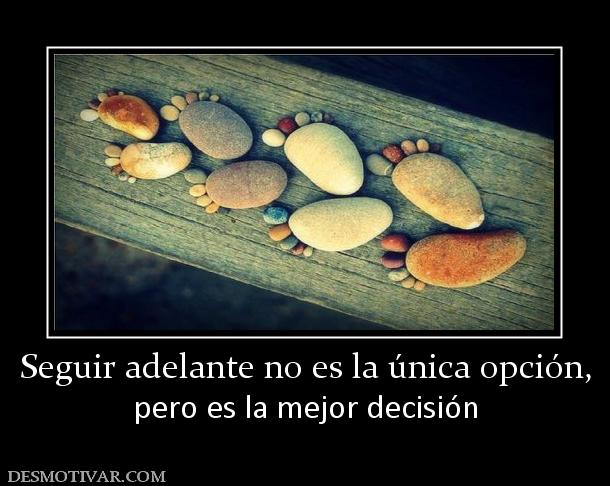
Talk to me on Skype, Falda. I know I can help you, however, you have to be willing to receive the help and follow it through.


Never Stop Yourself
Always keep in mind that your skin will wrinkle and that your hair will go white and that your days will become years… But the most important thing never changes–your strength of will and your convictions don’t have an age limit. Your spirit is like a feather duster to wipe away the cobwebs.
After every arrival there is a leaving. After every accomplishment there is another challenge. While you are alive, feel and know that you are alive.
When you are feeling sorry for yourself about what you used to be able to do, do something new. Don’t live surrounded by the yellowed photos of yesterday. Continue forward, even though you feel abandoned by others. Don’t let rust take away the steel that is in you.
Behave in a way that others respect you, not pity you.
When, due to your years, you cannot run–trot. When you can no longer trot–walk. When you can no longer walk–grab a cane and keep on going.
Never stop yourself.
Mother Teresa
No te detengas
Siempre ten presente que la piel se arruga, el pelo se vuelve blanco, los días se convierten en años… Pero lo importante no cambia, tu fuerza y tu convicción no tienen edad. Tu espíritu es el plumero de cualquier tela de araña.
Detrás de cada línea de llegada, hay una de partida. Detrás de cada logro, hay otro desafío. Mientras estés vivo, siéntete vivo.
Si extrañas lo que hacías, vuelve a hacerlo. No vivas de fotos amarillas… Sigue aunque todos esperen que abandones. No dejes que se oxide el hierro que hay en ti.
Haz que en vez de lástima, te tengan respeto.
Cuando por los años no puedas correr, trota. Cuando no puedas trotar, camina. Cuando no puedas caminar, usa el bastón…
¡Pero nunca te detengas!
Madre Teresa
You've got the grammar, vocab? then you just need to practise it! if it's possible , go to a spanish speaking country for a while and talk with spanish people everyday. and ! only speak spanish! If this is not possible I bet you can find some people on here who want to talk to you on skype.
check out this site: http://www.fluentin3months.com/
his motto is start speaking from day one, and has a lot of tips about how to do it if you're not it the country where they speak the language. It's valuable advice that you have to speak as much as you can, that's the only way you become fluent.
But I also want to emphasize that only speaking isn't enough either you need a certain imput before you can deliver an output. That's were grammar, vocab, and watching movies come in play.
watching movies is also good for developing an ear for the language as people tend to talk with an accent, swallow the end of words etc. and after hearing people talk enough you just predict what and how they will say things depending on the context and that way you understand it correctly no matter the accent.
Never stop, it takes time, lots of time and lots of effort. I can feel the same at times after 3 years, but then I reach new levels and it's really fun and exciting... I don't really plan on stopping learning. Who knows, maybe after 10 years, but I feel like there'll always be something new I could learn.
Thank you very much, everyone, for your words of encouragement and support, and for your offers of help. It means a lot, and being a member of this forum has definitely helped sustain my interest in Spanish over the course of these last twelve months.
I am going to continue with Spanish, and I look forward to reviewing my progress again in another six and twelve months and so on.
However, I thought it timely to take this opportunity to reflect on what I have achieved, if anything, during the first year. My ability to comprehend native spoken Spanish is by far the weakest arrow in my Spanish quiver. I suspect in other circumstances this might have caused me to lose faith and give up. However, I remember a similar experience with French many years ago, and it was only after living in France for a meaningful period of time that I eventually began to understand what folk were saying around me. Thus shall it be with Spanish (although it might take longer because despite how difficult French is to pronounce (initially), to my ear it's a clearer language with less regional variation).
That said, I intend to embark on a side-project for a few weeks, being Italian. I looked at Italian a few years ago and at that point found it quite obscure. However, having recently returned to it I can see that in many respects it's extremely similar to Spanish, and where it differs, it's often extremely similar to French. I don't propose to attempt to learn Italian to any real degree of useful proficiency (at this stage, anyway), but I would like to know some of the basics. I began my Spanish voyage with Michel Thomas, and it is with Michel Thomas that I will now begin my Italian voyage (or perhaps 'pleasure sail' would be more apt), and then after that I'll probably lay it back down for a few years.
I'll still be doing Spanish during this brief phase, although perhaps not so much.
In the past I was cautioned not to undertake two Romance languages at the same level at the same time for risk of confusion. However, by now I hope the basic nuts and bolts of Spanish are well enough integrated in my mind that I can tinker about with some Italian at the same time without unsettling them. And, if anything, I hope listening to a new language might force my ears to listen even harder, thus perhaps actually improving my Spanish aural comprehension (indeed, since starting Spanish I have to say my French aural comprehension has improved, which was a pleasant, unexpected side effect).
Gracias, amigos 

















