
La Palabra Del Dia: "reír"
reír ( reh-eer' )
verb ( to laugh )


There are many native English speakers here, most of us can offer great suggestions to the English sentences. I will do my best to go through them all, too. For the Spanish sentences, edit your posts according to the native Spanish speaker's suggestions. Use today's Word of the Day in your own Spanish sentence (and include the English translation as well). Try to use the word in a completely new way and vote on the sentences you like best. The winner will be chosen based upon the correct use of the word as well as the number of votes.
Guidelines:
Write sentences at least 5 words long, but don't write a paragraph either. Write your Spanish sentence, but include the English translation as well. Make the corrections suggested by other users and moderators in the comments section (try not to use personal pronouns unless absolutely necessary). Use your own words! (Don't use a translator, copy from a book, use song lyrics, etc.) Please keep political, religious or personal statements to a minimum. This is a practice game.
.
How to post a picture
.
 .
.
Examples:
1. Mi amigo siempre nos hace reír con sus chistes.
My friend always makes us laugh with his jokes.
2. Todo el mundo estaba riendo y gozando durante la fiesta.
Everyone was laughing and enjoying themselves during the party. .
.

10 Answers

Me gusta reír, pero aún más me gusta hacer reír a los demás.
I like to laugh, but even more I like to make others laugh.
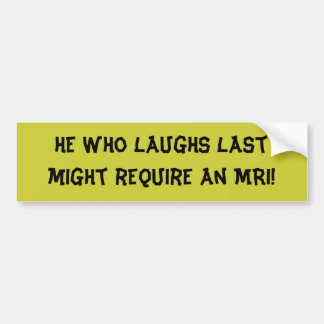
¿Cómo va el adagio? Quien ríe el último ríe mejor, o lo más alto, o durante un tiempo más largo o quizás sea que quien ríe el último piensa lo más lentamente o incluso no entiende el chiste.
How does the saying go? He who laughs last laughs best, or louder, or longer or perhaps it would be that he who laughs last thinks the slowest or doesn't even understand the joke.

Laugh and the world will laugh with you ,weep and the world giving you back will allow you to cry.
Chaplin tiene razón, el humor soluciona muchas cosas.
Chaplin is right, the humor solves many things.
Después de volver a casa de un día en las galerías del arte de Madrid, estoy bastante cansada, pero ahora puedo descansar y reir a las cosas divertidas que hace mi nieta pequeñita.
After returning from a day in the art galleries of Madrid, I am quite tired, but now I can relax and laugh at the funny things my little grand-daughter does.
No me río de bromas ofensivas. Espero que Mike Huckabee queme en el infierno.
I do not laugh at offensive jokes. I hope that Mike Huckabee burns in Hell.

Hizo el mundo reir, ¿pero fue capaz de reírse de sí mismo?
He made the world laugh, but was he able to laugh at himself?

Fui al parque el domingo. Vi a niños sin preocupaciones reírse de cosas muy simples.
I went to the park on Sunday. I saw worry-free children laughing at very simple things.
La verdad es que Eva se sentía bastante aburrida en el paraíso. Adán era un hombre formal y quizás guapo, pero no había ninguna otra mujer con quién charlar, no había tiendas ni bailes. Los animales eran muy bonitos y mansos pero no había ningún peligro, ni siquiera un parque de Disney donde uno podía reír a carcajadas y gritar como loca y Eva era una amante de la adrenalina. Por eso ofrecí a Adán la fruta prohibida, solo para ver si pasaba algo un poco mas interesante, y que sí ¡ pasó!
The truth is that Eve felt rather bored in Paradise. Adam was a good bloke, maybe handsome as well, but there was no other woman to chat with, there were no shops or dances. The animals were very beautiful and tame but there was no danger at all, not even a Disney adventure park where one could shriek with laughter and shout like mad and Eve was a thrill-seeker. This is why she offered Adam the forbidden fruit, just to see if anything a bit more interesting might happen, and by God, it did.
[1]: http://
Cuando pienso en cómo me veo en calcetines y calzoncillos
Me río como un desagüe.
When I think of how I look in socks and underpants I laugh like a drain.

Quiero practicar varias formas para decir cosas.
I want to practive various ways to say things.
A. Vi a niños despreocupados jugando en el parque riéndose de cosas muy simples.
B. Vi a niños despreocupados jugando y riéndose de cosas muy simples.
C. Vi a niños sin preocupaciones reirse de cosas muy simples.
D. Vi a niños sin preocupaciones riéndose de cosas muy simples.
E. Vi a niños sin preocupaciones los que fueron estaban riéndose de cosas muy simples.
F. Vi a niños sin preocupaciones los que eran estaban riéndose de cosas muy simples.
G. Habiendo visto a niños despreocupados jugando y riéndose en el parque, me siento mucho más mejor.
H. Despues de que habiá visto a los niños jugando en el parque, me sentía mejor.
A. I saw carefree children playing in the park laughing at/about very simple things.
B. I saw carefree children playing and laughing about very simple things.
C. I saw children without worries laugh at very simple things.
D. I saw children without worries laughing at very simple things.
E. I saw children without worries who were laughing at very simple things.
F. I saw children without worries who were laughing at very simple things.
G. Having seen carefree children playing and laughing in the park, I feel much better.
H. After I had seen the children playing in the park I felt better.


















