
La Palabra Del Dia: "carne"
carne ( kahr'-neh )
noun ( meat )
.


There are many native English speakers here, most of us can offer great suggestions to the English sentences. I will do my best to go through them all, too. For the Spanish sentences, edit your posts according to the native Spanish speaker's suggestions. Use today's Word of the Day in your own Spanish sentence (and include the English translation as well). Try to use the word in a completely new way and vote on the sentences you like best. The winner will be chosen based upon the correct use of the word as well as the number of votes.
.
Please encourage everyone with a vote. 
.
Guidelines:
Write sentences at least 5 words long, but don't write a paragraph either. Write your Spanish sentence, but include the English translation as well. Make the corrections suggested by other users and moderators in the comments section (try not to use personal pronouns unless absolutely necessary). Use your own words! (Don't use a translator, copy from a book, use song lyrics, etc.) Please keep political, religious or personal statements to a minimum. This is a practice game.
Instructions for posting a picture
.
.
Examples:
.
1. Rachel no ha comido carne desde que tenía nueve años.
Rachel hasn't eaten meat since she was nine years old.
2. Me encanta el olor de carne a la parilla.
I love the smell of grilled meat.
.

23 Answers
¿Sabías que la mayoría de los dinosaurios no comieron comía carne? De hecho, nuestra querida amiga Dani, quien fue una "danisaur" en tiempos prehistóricos, había comido al vegetariana estricta en los Taco Bells prehistóricos.
Did you know that most dinosaurs did not eat meat? In fact, our dear friend Dani, who was a ”danisaur” in prehistoric times, had eaten vegan at prehistoric Taco Bells.

Los seres humanos han cazado y matado animales por la carne desde tiempos prehistóricos.
Humans have hunted and killed animals for meat since prehistoric times.

Mi hija es vegetariana pero su esposo come carne y por eso es muy difícilacocinar para su familia.
My daughter is a vegetarian, but her husband eats meat and so it's very difficult to cook for their family.
Muchas gracias, Tiempo!

La carne de burro no es transparente.
Donkey meat isn't transparent.

En la Biblia, la expresión "sangre y carne" no se refiere a lo que se come, sino a la condición humana y la batalla que tenemos contra las fuerzas espirituales que nos confrontan todos los días.
In the Bible, the expression "flesh and blood" does not refer to something that we eat, but rather to the human condition and the battle that we have against the spiritual forces that confront us every day

Because everyone has already done a great job with "carne" I thought I would use a related word.
La palabra "carnal" no tiene nada que ver con lo que se come. En muchas partes de La America Latina esta palabra significa "un amigo muy íntimo", como un hermano-de la misma carne.
The word "carnal" doesn't have anything to do with what you eat. In many parts of Latin America, this word means "a very intimate friend," like a brother of the same flesh.

Many people do not eat meat on Friday, for religious reasons.
Muchas personas no comen la carne el viernes, por motivos religiosos.

La carne en España es la mejor que he comido , es un país difícil para los vegetarianos.
The meat in Spain is the best I have ever eaten , it is a hard country for vegetarians.

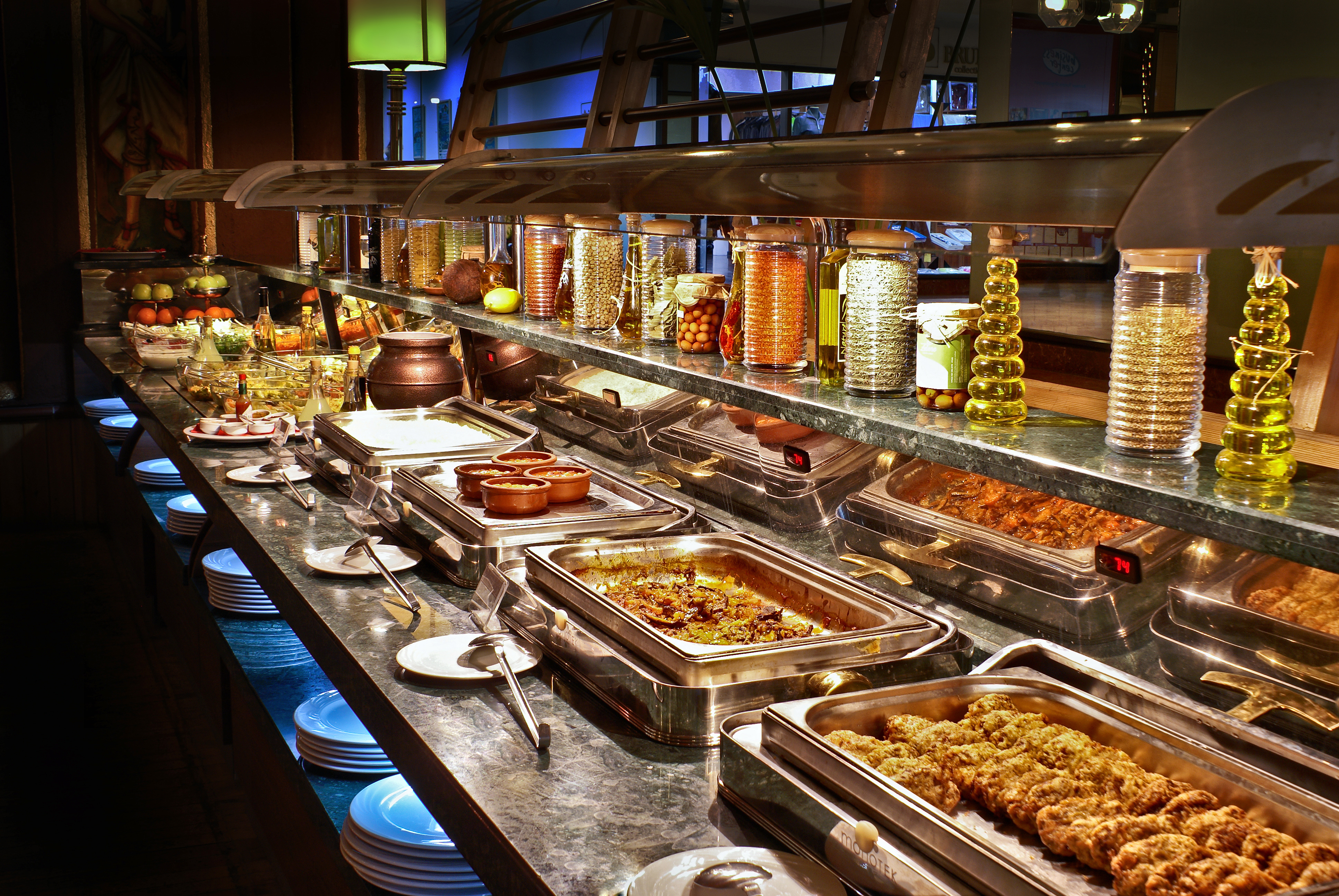
La mesa del buffet estaba muy bien organizado. Había varios tipos de carne encima de las cuales eran deliciosas salsas.
Revisión: La mesa del bufé estaba muy bien organizada. Había varios tipos de carne sobre las que había deliciosas salsas a disposición.
The buffet table was beautifully arranged. There were several types of meat with delicious sauces on them.
New sentence: please correct if necessary:
La mesa del bufé estaba muy bien organizada. Había varios tipos de carne con deliciosas salsas en ellos.
Alternate English: There were several types of meat on top of which were delicious sauces. This is the more literal translation of the Spanish that I wrote, but the first way would be more commonly said. I constructed the Spanish this way because I am trying to learn how to use "el cual or la cual" instead of "que" or "lo que".
Please correct my Spanish and tell me if you would say this differently.
Por favor, corrija mi español y dime si querrías decir esto de otra manera.
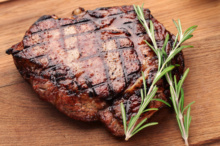
Comer carne roja no es bueno para su salud. Una buena idea es comer otras fuentes de proteínas en la mayoria de sus comidas.
Eating red meat is not good for your health. It is a good idea to eat other sources of protein in most of your meals.

El pollo es muy consumido en Perú; pero hoy comeremos un guiso de lentejas con carne de res. Mmm ¡qué rica comida!
We eat a lot of chicken in Peru; but today we will be eating beef stew with lentils. Mmm what delicious food!

Comer carne tiene una manera de unirnos. Anoche, compré un par de filetes de salmón de Escocia. Me gustaría que nuestro amigo escocés Falda-Escocesa me acompañe para la cena esta noche.
Eating meat has a way of bringing us together. Last night, I bought a couple of salmon steaks from Scotland. I would like our dear Scottish friend Falda-Escocesa to join me for dinner tonight.

I'd like 3 kilograms of hamburger, please.
Me gustaría tres kilos de carne molida, por favor.

Carnitas estilo Michoacán
¿Quién quiere unos tacos de carnitas estilo Michoacán?
Does anybody fancy some tacos of carnitas Michoacán style?

Traditional carnitas (little meats) are made by simmering pork meat in lard until tender over a very low heat in a copper pot.
Once the lard has melted, pork and flavorings are added (usually salt, chili, cumin, oregano or Mexican oregano, marjoram, thyme, bay leaf, and crushed garlic cloves).
Once appropriate tenderness is achieved, the heat is turned up and the outside of the pork begins to crisp.
The result is very tender and juicy meat, which is then typically served with chopped coriander leaves and diced onion, salsa, guacamole, tortillas, and refried beans and a cold beer.
Las carnitas tradicionalmente se preparan cociendo a fuego lento carne de puerco en manteca en una olla de cobre hasta que están suaves.
Una vez que se derrite la manteca de cerdo se añade la carne de puerco y se sazona, usualmente con sal, chile, comino, orégano, mejorana, tomillo, hojas de laurel y ajo.
Cuando se obtiene la suavidad deseada se sube el fuego hasta que la parte externa del puerco comienza a dorarse.
El resultado es una carne muy suave y jugosa, que se sirve típicamente con cilantro y cebolla picados, salsa, guacamole, tortillas y frijoles refritos y una cerveza bien fría.
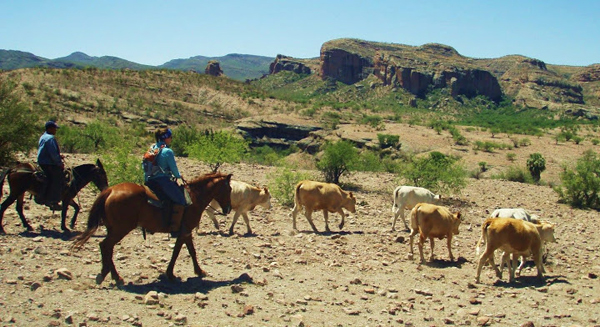
En la familia de mi padre eran rancheros, así que comían carne todos los días.
My dad's family were ranchers, so they used to eat meat everyday.

















