
"se".... confusion!!
Does
''La mujer está triste porque se va.''
mean
''the woman is sad because he is leaving''
or
''the woman is sad because he is leaving her'' ? or she is leaving him?
Doesn't this make the person being left the subject and indirect object?
4 Answers
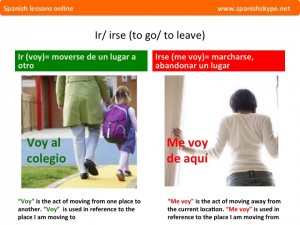
“Ir” is a non-reflexive verb meaning “to go”
“Irse” is a reflexive verb meaning “to leave”
Pablo tiene que irse pronto. Pablo has to leave soon.
Me voy para España mañana. I’m leaving for Spain tomorrow.
Your sentence was. “''La mujer está triste porque se va.''
The woman is sad because (someone) is leaving.
As the subject of “se va” is not stated, the meaning is not clear.
That’s why you are confused.
Hello Sandi,
Welcome to the SpanishDict forum 
You asked for help with this sentence:
La mujer esta triste porque se va
The sentence above could mean:
= The woman is sad because she is leaving...or
= The woman is sad because he is leaving.
Although the 3rd person singular se va also applies to the formal you = Usted form, in this context it is less likely that it it is referring to a stranger or a person in authority but it could be a relative like a grandfather as in some parts of Latin America they refer to members of the family using Usted.
The Spanish use different verbs to say to leave somebody in the sense of giving up on a relationship or abandoning them! They use the verbs dejar which also means to allow and to permit or the verb, abandonar .
eg:
1.Dejó a su marido por otro (hombre)
She left her husband for another man
2.The woman is sad because he left her!
= La mujer está triste porque la dejó a ellà.
Source: 1.Oxford English/Spanish Dictionary 4th edn 2 My own example
I hope this helps
Corrijan mi español si es necesario, por favor
Could it not mean "he is leaving," "she is leaving" (either the woman herself or another woman), or "you (formal) are leaving"? It would depend on the context, right?
Thank you all for your comments - it is clearer now. The picture showed two people saying goodbye at the train station, however, it was not clear from the image (Rosetta Stone) which person was actually leaving. Thanks again

















