
collocations of meet and take
cuales son la colocaciones de meet y take
4 Answers
What are collocations? Click this to find out.
Mirian - You question specifically asks about "meet" and "take"
These are verbs and when used with a preposition or adverb they have new meanings. I know 64 phrasal verbs using the verb "to get".
What are phrasal verbs? Click this to find out.
Hay 100s de verbos compuestos en Inglés y se utilizan todo el tiempo.
No creo que existan en español.
Examples - from my dictionary
We're meeting up with Gary, if you want to come.
Si quieres venirte, hemos quedado con Gary.
It was lucky we met up with them.
Fue una suerte encontrárnoslos.
I expect we'll meet up again some time.
Supongo que coincidiremos de nuevo alguna vez.
I was taken aback by his rudeness.
Su grosería me dejó desconcertado.
NOTA Take sb aback se utiliza casi siempre en pasiva.
Your daughter doesn't take after you at all.
Tu hija no se parece en nada a ti.
I've got long legs — I take after my father.
Tengo las piernas muy largas, salgo a mi padre.
2 (esp USA, antic) salir corriendo tras algn:
She suddenly took after them. De repente salió corriendo tras ellos.
or
She suddenly took off after them.
Cuando estudiamos inglés, una de las cosas más difíciles es memorizar todas las "collocations", o sea, dos o más palabras que normalmente van juntas. También existen en español, claro, pero no se estudian con ese nombre.
Por ejemplo, en inglés se dice "fast food" y no "quick food", pero es una "quick meal" y no una "fast meal".
Una buena forma de encontrar las "collocations" para una palabra es buscarlas en el diccionario de Oxford

Y hay muchos libros para practicar con ellas:
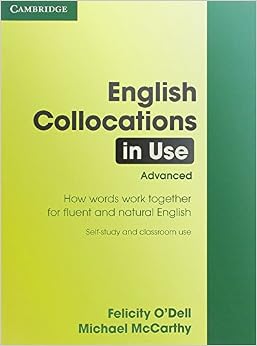
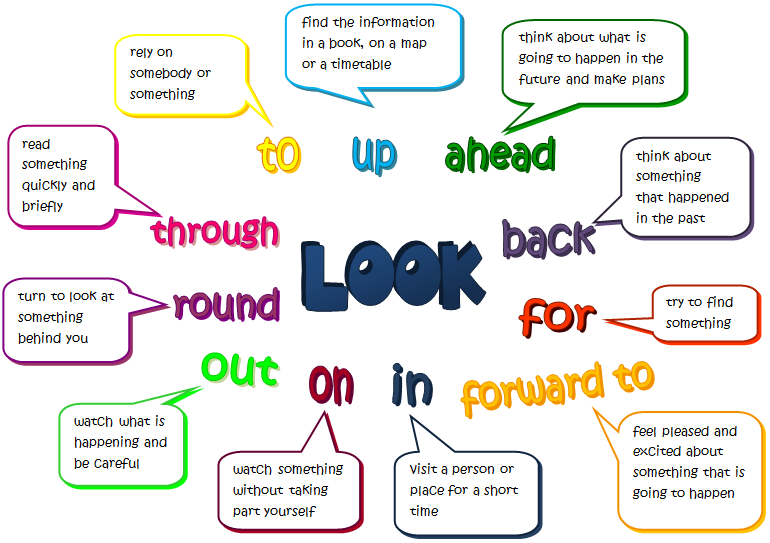
No confundir con los "phrasal verbs", que esos son otra historia:
Un antiguo hilo sobre "collocations" en SD.
No entiendo la pregunta. ¿Puedes darnos un poco de contexto? ¿Neceseitas una tradcción o--qué? "Meet" (conocer/encontrarse con y "take" tomar,etc. son verbos y los puedes colocar donde deben estar en una frase, como los colocas en español.
If you do not understand the above, you will have to tell us, in your profile, for example or even in an answer box, what your level of English or Spanish is, so we will know in what language to answer.
¡Hay que hacerle caso a la profesora!
No estoy seguro de qué tipo de collocaciones que estás buscando, pero voy a tratar con "take."
take in = to perceive or understand, as in "Are you taking in all this information?" or, alternatively, to give a home to, as in "My girlfriend keeps taking in stray dogs."
take out = to escort to a place outside the home or to take food away from a restaurant to be eaten or to remove something from a container
take up = to begin doing something as in "I think I'll take up skiing" or to make a garment smaller or shorter as in "Can you take up this jacket to fit me?"
take over = to usurp another's authority or power, to assume another's responsibility, to become the person in charge
Son sólo algunos.

















