
Personal pronoun order
The post by Gringojrf got me thinking.
http://www.spanishdict.com/answers/264924/pueden-agradecrmelo-ms-tarde
Most of us have learned RID (Reflexive, Indirect, Direct) as the traditional order of pronouns.
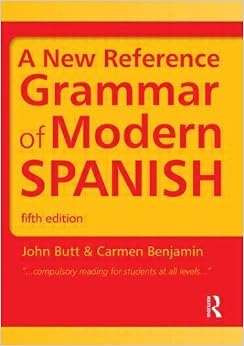
But, I have seen an alternative claim (Butt and Benjamin) that the order of the pronouns can be thought of as:
1-se
2-te/os
3-me/nos
4-le/les/lo/la/los/las
His question would have had “me” as the direct object, and the thing for which he was being thanked as the indirect object- and so the question was why was it melo and not leme. The latter combination would be against the other (Butt and Benjamin) rule, but allowed by the RID rule.
So it makes me wonder whether Spanish verbs are constructed in a way that does not allow that to happen (as regards what is the direct object and what is the indirect object).
So I am wondering if anyone can come up with an example breaking this second rule (from a grammatically correct native speaker source, of course). If both rules work, then it may be useful to know both to help avoid pitfalls.
Edit to add:
The above link lets you scroll through the whole book, see section 11.12 page 143
5 Answers
Ok, I'm back ...
After talking about this with another 'grammar geek' friend of mine who is the bomb at pinning this kind of tricky thing down (thank you Quentin) this is what we've come up with as far as a grammar rule goes and it's simpler than you may imagine.
As you mentioned Bosque, most people learn the RID rule to know which order to put object pronouns. Reflexive, indirect, direct. And if we just use that it seems like there's no reason why le me wouldn't work, with 'me' being the direct object pronoun.
The only problem is that there is another rule that must be obeyed first and foremost 
RAE's Diccionario panhispánico de dudas basically says that the pronoun order must go as follows ...
"Se" (if it occurs) first, then the second person, first person, third person.
So simply put ... for your example 'le me' - you'd be putting the third person before the first person which just can't happen.
I hope that helps and although I knew I'd never seen 'le me' or heard it and instinctively knew it was wrong, I do like to know the reason/rule behind it, so thanks for raising the question.
Since I don't understand Spanish grammar, can you do away with examples?
Thanks.
I refuse to learn my own grammar and yes, you can call me ignorant or ignoramus!
No the question is can "le" ever be the indirect object while "me" ( or "te" which also can be either) is the direct object. Leave "lo" and all the 3rd person direct object pronouns out of it. I am asking if "le" or "les" ever combine with "me" or "te". - bosquederoble
Ah I see, sorry, hmmm well I can't think of a rule off the top of my head but I have to say that I've never seen such a combination. I'll see what I can find out about it.
His question would have had “me” as the direct object, and the thing for which he was being thanked as the indirect object- and so the question was why was it melo and not leme.
Hmmm have you overthought this?
Iop's = me, te, le, os, les (and se when avoiding le la etc)
Dop's = me, te, lo, la, nos, os, los, las
So although me can be either, lo can never be an indirect object pronoun.
Pueden agradecérmelo.
Me = indirect object pronoun
Lo = direct obect pronoun
'It' (lo) (the gratitude) can be expressed 'to me' (me) later.
Following the R.I.D. order. (Coincidentally the same order shown in your excerpt from Benjamin & Butt (great book btw)).
So I believe that all is well in the world of Spanish object pronouns
Unless I've missed something?
Okay, I probably was a little too long-winded and indirect in my original question.
I have no questions regarding how to use lo with me. I felt I understood it well enough to answer gringojrf's original question. It brought up a completely different question for me:
My question is:
Are there any cases where either "me" or "te" would be used as direct objects in combination with either "le" or "les" as indirect objects around the same verb (either both immediately preceding it, or both attached to the end of it). And I should clarify that I am asking for a non-reflexive use of me or te- the verb should not be conjugated to either object.
Sorry for not being sufficiently clear.

















