
¿Qué palabra aprendiste el día de hoy?
Todos los días me propongo a aprender una palabra nueva.
Me gustaría que compartieran qué palabra aprendieron el día de hoy.
Yo comparto mi palabra en inglés porque es el idioma que estoy aprendiendo.
Tú comparte una palabra que aprendiste hoy en el idioma que estás aprendiendo.
Aquí les comparto la palabra que yo aprendí en inglés el día de hoy:
"Lanky" : Awkwardly tall and thin.
En español: Larguirucho Encontré mi palabra en el libro "Number the Stars".
Have fun!


52 Answers
Breakfast in Spanish is desayuno. The verb is desayunar , a word that can be split up to parts:
- des is a prefix that indicates negation or inversion.
- ayunar means to abstain from eating.
Given that 'break' means romper I thought that the structure could be the same in English: 'break/cease - fast'. So I checked it out and I found that 'fast' means ayuno (period for avoiding food).
Summing up: I learned that 'fast' also means ayuno or ayunar.
Un saludo.
el parachoques - the bumper
The bumper of a car in Spanish is called, el parachoques.
El parachoques de un coche en español se llama, el parachoques.

La palabra " larguirucho" es una nueva palabra para mi a usar.
Here " lanky " is not used much , we tend to say ," he is as thin as a rake"
or " like a flag- pole" but if he is awkwardly tall he will be nicknamed " Tangles "
Pero la palabra que aprendí hoy es "dueño"
Nadie es el dueño de un gato ,
el gato está totalmente individualista.

¡Buena propuesta! Voy a intentarlo por diversión :D
Hoy, aprendí la palabra "esclavitud". El sinónimo de esclavitud en inglés es "slavery". La esclavitud es el situación por la cual uno no tiene sus derechos, está comprado y vendido como propiedad de otros y está forzado a trabajar como un animal de trabajo. Incluso hoy, hay esclavos (personas en esclavitud) en muchos paises del mundo.

Leí esta palabra cuando estuve navegando por net (buscando nuevas palabras).
Lo siento para mi (posiblemente incorrecto) español. Soy nuevo estudiante. Por favor me ayuda a corregirlo (si necesario). ¡Gracias!
La palabra que aprendí hoy es "ostracismo". Fue parte de un hilo sobre la tema de la metáfora.
Es una palabra o tema triste porque significa exilio, extrañamiento, cosas asi. Es facil recordar porque en inglés es ostracisim, o ostracize. La mayoría del tiempo significa rechazo o rehuido en inglés.
Lo siento que no estoy cuidando mucho mi español.
La foto es un niño sufriendo el ostracismo.
Me gusta tu idea.

Hoy aprendí la palabra "trudge".
Trudge: To walk heavily or wearily.
Trudge quiere decir en español: caminar fatigosamente o arduamente.

I've not had time to learn much today, but in passing Rogspax has taught me an entirely new use for ' luz' , as a part of a bridge! ( possibly cantalever? span? section that lifts// )
Muchas gracias, Roger.
I didn't learn a new word but a useful new phrase or rather translation of an idiom that I have used on occasion in English. I was talking to a lady in my church, today, who originally comes from Bolivia and sharing this phrase with her and she said yes, she uses it on occasion with her children; she has 3 boys! She told me that ni is stronger/more emphatic!
¡Ni (o no) se te ocurra! = Don't even think about it!
This is a useful phrase if you can accurately anticipate what your children are likely to do and want to discourage behaviour before it leads to fighting, arguments, or even tears ...and that's just the parents!!
Seriously speaking, I think this is this is a useful phrase along with:
'Let's not go there!" = ...¡No toquemos ese tema¡ I learnt this from a response, from Gekkosan, (a Spanish speaking native) to a question I posed here quite a long time ago asking how native Spansh speakers express that same idea in Spanish!,
Irrespetuoso- Disrespectful
El fue' irrespetuoso' a me , y he perdido la cara".
Significado he perdido credibilidad.
¿Puede usa esa palabra en español?
También la expresión ,- perdido la cara ' .
He was 'disrespectful' to me, and I've lost face. "
Meaning I lost credibility.
Can you use that word in Spanish?
Also the expression - I lost face '!

Hoy aprendí la palabra "intricate".
Intricate quiere decir: difficult to understand; obscure; complex; puzzling;entangled or involved.
Intricate en español quiere decir: complejo, intrincado.
When I read the word "intricate" for the first time, I thought that it meant "delicate". I don't know why. I'm glad I looked it up.

catavinos
cata (he/she tastes) followed by vinos (wines) gives us catavinos, a winetaster or barhop, depending on the context.
Un catavinos es un catador de vinos.
A catavinos is a wine taster.

Pienso que la palabra tiquismiquis es fantástico. Tiquismiquis significa remilgado o quisquilloso. Por ejemplo la mujer abajo es tiquismiquis y por lo tanto no se puede elegir un novio.
I think that the word tiquismiquis is fantastic. Tiquismiquis means fussy (eater) or a nit picker. For example, the lady below is picky and so cannot choose a boyfriend

The word I learned today (a really cool one) is Las ñáñaras
Ñáñaras or 'las ñáñaras' is a disquieting feeling you might get when you encounter something or someone unsettling. Commonly known as having 'the creeps'.
Ese hombre me da las ñáñaras.
That guy gives me the creeps.

Gracias Susy :-D
Hoy aprendí algo nuevo, pero es una frase: "As the crow flies" que quiere decir "en línea recta".
Nunca había escuchado esto y hoy ¡ya lo he escuchado en dos ocasiones!
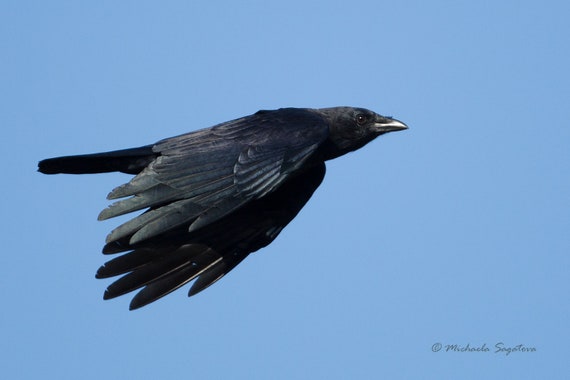
Ejemplo:
As the crow flies, I live only half a mile from the gym.
Vivo solamente a media milla del gimnasio en línea recta.
- Por favor revisen mi inglés.

Okay, this morning I went to buy a piece of cheese for making potato & cheese soup (caldo de papas y queso). The clerk asked if I wanted it fresco or oreado. Now I know what queso fresco is because I love it. But oreado was a new word for me. So to the dictionary I went.
orear = To dry, to air, to expose to the air.
So every day is a learning experience.

















