Home
Q&A
No. 27 - Weekly perífrasis verbales: Practice Exercise: andar + participio

No. 27 - Weekly perífrasis verbales: Practice Exercise: andar + participio

5
votes

No. 27 - Weekly perífrasis verbales: Practice Exercise: andar + participio

Note well - this week uses the participio! & Andar is irregular!

What's a 'participio'? See this link: Grammar lesson on participios
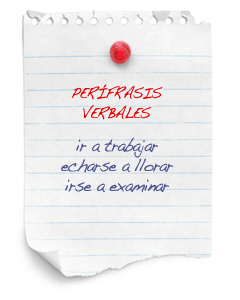
enter image description here

*Note: andar + participio - Es una perífrasis que utilizamos mucho los españoles. La utilizamos mucho para hablar sobre estados de ánimo que se prolongan hasta el momento presente.

This is a periphrase we Spanish use quite a bit. We use this phrase a lot to talk about states of mind which extend into the present moment. What is happening in one part of the sentence affects the other. In some sense, you could replace is/are/was for andar

Andar + participio -> is/are/was/were + participle

Example/Ejemplo

Andar+ participio

Desde que me mudé ando perdido por las calles de esta ciudad.

Ever since I moved to this city, I am muddled in the streets.

(He goes around feeling lost because of the move to the city.)

La clave estaría en que en esta frase no significa solamente que no sabe en qué calle está, también que el traslado a otra casa tiene confuso al sujeto.

The key would be that in this phrase, it doesn't just mean that you don't know what street it is, but also that the move to another house has confused the matter further.

++++++++++++++++++++++++++++++++++++++++++++++++++

A ‘perífrasis verbal’ is a structure with a helping verb plus an ‘infinitivo’ or a ‘gerundio’ (verb that ends in ar, er, ir).

More info on perifrasis verbales: a very helpful link

Good link to explain perifrases verbales: great link by another SD contributor

Let’s practice a few of these in simple sentences. Here are the rules:

1.One sentence per post.

2.Use the ‘perífrasis verbal’ for this week in a sentence in Spanish. Then write it in English.

3.You may post one image to illustrate your sentence.

SilviaC will be the corrector for the Spanish. I will help out on the English. SilviaC ++++++++++++++++++++++++++++++++++++++++++++++++++++++

Una “perífrasis verbal” tiene una estructura con un verbo auxiliar y un “infinitivo” o “gerundio”.

Vamos a practicar un poco estas estructuras en oraciones simples. Estas son las reglas:

1.Una oración por respuesta

2.Usa la perífrasis verbal escogida para esta semana y escribe una oración con ella en español y en inglés.

3.Puedes usar una imagen para ilustrar tu respuesta.

SilviaC será la correctora de español. Yo ayudaré con el inglés.

*If you missed last week's practice here is the link: no. 26 - dejar + participio

5491 views
updated Jul 4, 2013
edited by katydew
posted by katydew
Hi, ladies ;-) - mcl020, Jun 9, 2013
Hi! - 0095ca4c, Jun 9, 2013
This one is too hard: ) - Ranman, Jun 9, 2013
Ranman, we are soaring to new heights, with or without a parachute. Hi all. We shall all go down with the ship or come out victorious. ha. - katydew, Jun 10, 2013

12 Answers

3
votes

En tiempo de guerra, muchos soldados andan lesionados con heridas físicas así como psicológicas.

In time of war, many soldiers are injured with physical wounds as well as psychological ones.

(I found this really difficult, hopefully I'm on the right track?)

enter image description here

updated Jul 4, 2013
edited by 0095ca4c
posted by 0095ca4c
This is very true. - katydew, Jun 10, 2013
¡Buenísima! Para que esté perfecta sólo habrá que poner "lesionados" en plural; y las tildes en "físicas" y "así". - SilviaC, Jun 10, 2013
Thank you SO much Silvia! You are a gem. - 0095ca4c, Jun 11, 2013
5
votes

You need another emergency chocolate bar? Tell me, what sort of trouble are you in now?

¿Necesitas otra barra de chocolate de emergencia? Dime, ¿en qué lío andas metido ahora?

enter image description here

updated Jun 11, 2013
edited by mcl020
posted by mcl020
I'm in trouble now because I haven't got a clue. Chocolate por favor...pero muy pronto. - 0095ca4c, Jun 10, 2013
Very daring sentence, MC. - katydew, Jun 10, 2013
Oh, and pass the chocolate. - katydew, Jun 10, 2013
¡Excelente! - francobollo, Jun 10, 2013
¡Perfecta! :-D - SilviaC, Jun 10, 2013
Wow, wow, wow, thanks Silvia and Franco and katy .... it was well worth the struggle, this sentence ;-)))))) - mcl020, Jun 11, 2013
4
votes

Esta chica debería prestar más atención. Siempre anda distraída.

This girl should pay more attention. She's always distracted.


enter image description here

updated Jul 4, 2013
posted by francobollo
Oops, caldo de pescado. - 0095ca4c, Jun 10, 2013
El pez parece consciente del destino inminente. - katydew, Jun 10, 2013
She's distracted. The fish is totaly focused. - katydew, Jun 10, 2013
¡Estupenda frase! Muy buena :-D - SilviaC, Jun 10, 2013
good one! - chellapadua, Jun 15, 2013
4
votes

Después de leer un buen libro, ando agotada el día siguiente debido a quedarme despierta hasta demasiado tarde.

After reading a good book, I go around exhausted the next day due to staying up too late.

enter image description here

updated Jun 12, 2013
edited by GraceM
posted by GraceM
¡Muy buena! Puedes mejorarla poniendo "hasta demasiado tarde". - SilviaC, Jun 10, 2013
I haven't done that for awhile, however, staying up too late on SD is another story. - katydew, Jun 10, 2013
Agradezco la ayuda, Silvia. :) - GraceM, Jun 11, 2013
4
votes

They were in shock.

Anduvieron estupefactos.

enter image description here

updated Jun 11, 2013
edited by Ranman
posted by Ranman
I know this one is wrong Silvia.: ) - Ranman, Jun 10, 2013
Hi Ranman! I tried, but I'm afraid....very afraid. I'm giving you a vote for trying too! - 0095ca4c, Jun 10, 2013
We'll all give Silvia a run for her money. Hope she's had coffee! ;o) - katydew, Jun 10, 2013
Anduvieron estupefactos o asombrados is the closest thing I would use. - francobollo, Jun 10, 2013
But those are adjectives, not participles, I think??? This is hard! - jennysk, Jun 10, 2013
¡Jajajaja! Gracias por la aclaración. Una muy buena opción es la que dice Francobollo. "Anduvieron estupefactos". - SilviaC, Jun 10, 2013
Thanks everybody: ) - Ranman, Jun 10, 2013
Yes, and my contribution? I brought the coffee. - katydew, Jun 11, 2013
4
votes

When he lost his job he went around being drunk for almost a year.

Cuando perdió su puesto, anduvo bebido desde hace por un año.

enter image description here

updated Jun 10, 2013
edited by katydew
posted by katydew
This one is a brain sizzler this week. - katydew, Jun 9, 2013
It really is, I have struggled quite some time on my sentence ... - mcl020, Jun 9, 2013
Yeah, I don't have a clew.: ) - Ranman, Jun 9, 2013
That must have cost him a small fortune, now he needs another job to pay for it. - 0095ca4c, Jun 10, 2013
¡Buena frase! La conjugación del verbo andar es perfecta. Lo único que deberías cambar es el "desde hace". Como el verbo habla de un pasado absoluto es mejor decir "por un año". - SilviaC, Jun 10, 2013
Thanks Silvia. I was not so sure about the English translation. Hope it's ok too. - katydew, Jun 10, 2013
Estas expresiones son complejas... pero así es el español. Lo mejor es que poco a poco se acaban dominando. :-D - SilviaC, Jun 10, 2013
3
votes

My attempt:

¡Me duele la cabeza porque ando trabajando con una perífrasis difícil!

My head is pounding because I am working with a difficult periphrase!

enter image description here

updated Jun 13, 2013
posted by bandit51jd
cute pic! :) - chellapadua, Jun 12, 2013
Yes, I think I might have made it harder than it should be. - katydew, Jun 12, 2013
¡Es fantástica! :-D Lo único que usas dos gerundio y habíamos pedido un participio. Pero si este fuese un ejercicio de gerundio sería estupenda. - SilviaC, Jun 13, 2013
2
votes

Me gusta andar siempre haciendo algo constructivo.

I like always to be doing something constructive.

updated Jun 13, 2013
edited by gohern
posted by gohern
Leave this one and try another if you want to. Or it's not a problem. It's good to know both exist. Good to see you again. Were you away awhile? - katydew, Jun 11, 2013
Ah, there you are. Your pattern with the gerundio is certainly a periphase on its own. But this week it is andar + participio ( the ones that take the verb and end it with -ado, -ido = the 'ed'words in English). - i.e. hablar -> hablado. . - katydew, Jun 11, 2013
Una bonita frase, aunque use el gerundio, de todos modos. Eso sí, el gerundio debería acabar en "o"; "haciendo" ;-) - SilviaC, Jun 12, 2013
2
votes

En la primera, anduve confundido acerca de cómo usar "andar + participio" pero ahora comprendo.

At first I was confused about how to us "andar + participio" but now I understand.

updated Jun 12, 2013
posted by gohern
Katy not away just busy with an invasion of 9 grandchildren - gohern, Jun 12, 2013
¡Perfecta! :-) - SilviaC, Jun 12, 2013
Oh my goodness. 9 at once!!!!! You are blessed and maybe a bit tired. - katydew, Jun 12, 2013
2
votes

Después de reunirse con su novia, anduvo sentido feliz con éxtasis.

After meeting his girlfriend, he went around feeling ecstatically happy.

enter image description here

updated Jun 11, 2013
posted by jennysk
Es una buena frase. Sólo necesitas quitar el "sentido" y la frase sería perfecta. "Anduvo feliz y en éxtasis". - SilviaC, Jun 10, 2013
That's a funny illustration. Love does strange things to a man. - katydew, Jun 10, 2013
Now I am really confused. Isn't there supposed to be a participle after anduvo? Feliz is an adjective. This is what I asked in Ranman's answer. - jennysk, Jun 10, 2013
Sí. Puedes usar un participio, pero en este caso en particular es complicado usar uno que de significado de felicidad. Quizá "anduvo contento y en éxtasis", ahora que lo pienso. - SilviaC, Jun 10, 2013
Me gustaria tratar otra vez, con un participio. - jennysk, Jun 11, 2013
If at first you don't succeed.... ;o) - katydew, Jun 11, 2013
1
vote

Desde que comencé aprender español, ando confundido mucho del tiempo.

Since I started to learn Spanish, I am (go around) confused a lot of the time.

enter image description here

updated Jun 12, 2013
edited by jennysk
posted by jennysk
Este es correcto con participio? - jennysk, Jun 11, 2013
¡Sí! Esta es muy buena. :-D. Esperamos ayudarte a terminar con esa confusión :-) - SilviaC, Jun 11, 2013
Muchas gracias Silvia. Mi consuegra venezolana tambien se llama Silvia! - jennysk, Jun 11, 2013
Every example that is "muy buena" helps me understand the usage too. - katydew, Jun 11, 2013
¿También se llama Silvia? ¡Entonces seguro que es buena persona! :-D. ¡Gracias, Katy! No había pensado en el uso didáctido del "muy buena" ^___^ - SilviaC, Jun 12, 2013
0
votes

Last chance to catch up before we hit no. 28! Ready or not, here we come.

updated Jun 14, 2013
posted by katydew
















