
Today's "Subjunctive - Reconocer - to recognize, acknowledge"
Bienvenido al foro abierto en SpanishDict.com. Welcome to the open forum at SpanishDict.com
1A. First concept of Subjunctive --- Direct or Indirect commands.
1B. When one person expresses his will that someone else do something.
1 I suggest that she come at once. (Sugiero que venga en seguida.)
2 They demanded that we be there on time. ( Ellos exigieron que estemos allí a tiempo.)
3 I beg you not to tell it to me. (Te ruego que no me lo digas).
4 We want you to teach us the dance. (Queremos que nos enseñes el baile.)
5 It’s important that yo do it right away. (Es importante que lo hagas en seguida.)
6 They insist that we return tomorrow (Insisten en que volvamos mañana)
7 We are going to write him to send it to them. (Vamos a escribirle que se lo mande.)
2A. Second concept of Subjunctive---Emotion
2B. Main clause expresses emotion about the action that follows.
- I hope she comes. (Espero que venga.)
2 It surprises me that you (should/are) doing that.( Me sorprende que lo hagas).
3 The teacher doesn’t like that he falls asleep in class.( No le gusta al maestro que se duerma en la clase.)
4 I’m sorry that he is sick. (Siento que esté malo.)
5 They are afraid that Ray will leave today. (Temen que Ray se vaya hoy.)
6 I’m happy that she is better. (Me alegro de que esté mejor)
7 He hopes that we recognize him. (Espera que lo reconozcamos.)
3A. Third concept of Subjunctive--- Unreality
3B.. When the main clause expresses uncertainty, denial, doubt.
1 Is it possible that he eats so much? (¿Es posible que coma tanto?)
2 I don’t believe that he will anger me.. (No creo que me enfade.)
3C. Conjunctions that introduce the “subordinate clause” make the action uncertain, indefinite, doubtful
1 In case you see him, tell him that I want to talk to them. (En caso de que lo veas, dile que quiero hablarles.)
2 We won’t share it unless you pay us. (No lo compartiremos a menos que nos pague.)
3D.. Conjunction of time intoduces action that has not yet been completed
1 Before you get fat, stop eating. (Antes de que te pongas gorda, deje de comer.)
2 When the phone rings, answer it. (Cuando suene el teléfono, contéstalo.)
3E. “Subordinate clause” refers back to something non-existent, indefinite, or imagined, (In an adjectival clause (if) the antecedente is something or someone that is indefinite, negative, vague, or non-exsitent.
1 Busco un libro que tenga todas las respuestas. ( “Que”-is the relative pronoun) refers (to “un libro”-which is the antecedent) “un libro” is indefinite. Thus, “Subordinate clause” must be “subjunctive”.
2 ¿Hay alguien que entienda todo? “alguien-somewhat vague antecedent” “que- relative pronoun = “Subjunctive” in “Subordinate Clause”.
3 No hay “nadie” (indefinit,vague antecedent) que baile como ella.
- ¿Hay un lápiz que escriba en tres colores?
4A. Uses of Imperfect subjunctive.
4B. When the main clause is in the past and a subjunctive is required.
1 I wanted you to go. ( Quería que fueras) ,
2 I told them to call me. (Les dije que me llamaren)
4C. When subjunctive subordinate clause refers to a past action
1 I can’t believe that he did it. (No creo que lo hiciera),
2 It’s a pitty that they were sick. (Es lástima que estuvieran malos).
3 I can’t believe that you killed it. (No creo que Ud. lo matara)
4D. When conjunction of time introduces action that (had) not yet been completed.
1 She told us that she would wait until we returned. )Nos dijo que esperaría hasta que volviéramos.)
2 He promise to call me as soon as he could. (Prometió llamarme así que pudiera)
5A. Review of ( si ) ( if )
5B. When (si ) introduces present tense, a subjunctive is never used. If he eats…, Spanish regards it as meaning “suppose”, or “assuming” which is the indicative.
5C. But, when (si) refers to something “contrary to fact”, then Spanish uses the imperfect subjunctive.
Compare the four below----
1 Present indicative – If I have time (assuming I do), I will do. (Si tengo tiempo, iré)
2 Imperfect subjunctive – If I had time (but I don’t) I would go. (Si tuviera tiempo, iría.)
3 Present Indicative – If he is rich (assuming he is), he will buy it. (Si es rico lo comprará)
4 Imperfect subjunctive – If he were rich (but he's not), he would buy it. (Si fuera rico, lo compraría)
6A. Some “Personal” expressions 100% always imply doubt, uncertainty, or denial
Es possible que…
Es imposible que…
No es verdad que….,
No es cierto que….
Es probable que…
Es improbable que…
Es fácil (likely) que…
Es dfícil (unlikely) que…
6B. Indirect or Impied commands…such as, but not limited to….introduce subjunctives
Es importante que…..(It’s important that….)
Insisten en que…..(They insist that……)
7A. Some “conjunctions” 100% always uncertainty, or indefinite.
(In case)-En caso de que…,,
(unless)-A menos que…
,(provided that)- Con tal que…
(Before) Antes de que…
8A. “conjunctions “50-50% may or may not… “depending on what the speaker says”
(although,even though, even if) – aunque,
(granted that) Dado que,
9A “Conjunctions of time” 50-50% “depending if uncompleted, pending, unfulfilled.
(when) cuando,
(after) después de que,
(as soon as) así que, (
until )hasta que
10A. “creer” used in subjunctive
It is the speaker’s expression of “Certainty vs Doubt” not the word “creer” itself which calls for indicative or subjunctive. The speaker is in the drivers seat.
1 ¿Cree ud. que vengan? Do you think they’ll come? (I doubt it)
2 ¿Cree ud. que vendrán? Do you think that they’ll come? (i assume they will)
3 ¿Crees que lloverá? Do you think that it will rain? ( I don’t know, but it looks that way to me)
4 ¿Çrees que llueva mañana? Do think that it will rain tomorrow? ( I don’t know…I have my doubt)
5 No creo que lo hizo. I don’t believe that he did it (I’m sure he didn’t)
6 No creo que lo hiciera. I don’t believe that he did it. (But, I’m not sure)
Some comparisions of Present-Imperfect subjunctives
1 Quiero que ud. le hable. I want you to call him
2 Quería que ud. le llamara. I wanted you to call him
3 Salgamos antes de que vuelvan. Let’s leave before they return.
4 Salimos antes de que volvieran. We left before they returned.
5 No creía que fuera ella. I didn’t believe that it was her.
6 No creo que fuera ella. I don’t believe (presently) that it was her.
11 A If the subject doesn’t change, then we have only one clause, and there is no room for the subjunctive mood at all.
Espera venir – (He hopes to come)
Sentimos estar tan lejos – (We are sorry we’re so far away.)
No puedo creer que lo comí todo – (I can’t believe I ate the whole thing)
This is just an overview and does not include “haber” or compound tenses.
I give you the “verb” . You use it in a subjunctive sentence.
The verb for today is : “ Reconocer – to rrecognize, acknowledge “
Write sentences with “ Reconocer " in the Subjunctive mood.
Escríbamela en inglés y español...por favor. Write it for me in English and Spanish please. ¡Incluyan caudros/dibujos…cuando los prefieran! Include pictures/drawings…when you prefer them!
6 Answers
Cuando vea a mi alma gemelo espero que lo reconozca.
When I see my soulmate , I hope I'll recognize him.
.
Él espera a que algún día se le reconozca para su talento.
He hopes to one day be recognized for his talent.
.
Espero que se reconozcan aunque ya han pasado diez años.
I hope they recognize each other although it's been ten years.
Me pregunto si mis amigos me reconozcan después de treinta años.
I wonder if my friends recognize me after thirty years.
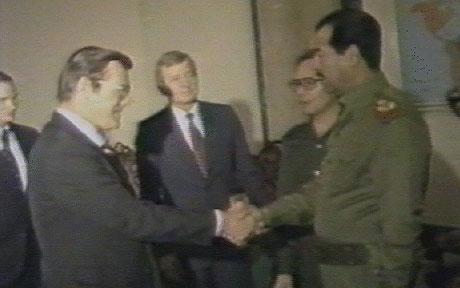
Let's shake hands, in 20 years, when, for different reasons, we don't recognise each other, I'll set your country ablaze and send you to hell.
Démonos la mano, que en 20 años, cuando por distintos motivos no nos reconozcamos, le prenderé fuego a tu tierra y te mandaré al infierno.
¡Ojalá que me reconozca! Será tan vergonzoso si cree que soy una desconocida...
I hope she recognizes me! It will be so embarrassing if she thinks I'm a stranger...

















