
Horse terms in Spanish
What is English riding called in Spanish? Also, what are some other horse terms? I only know the basics. Thanks!
6 Answers
Hola Henrietta, aqui están unos cuantos:
A la Groupa ~ usually seen at parades, exhibitions and feria, a couple rides with the woman behind the saddle on a pad (side saddle, not astride) in a brilliant flamenco dress.
Amazona ~ a woman riding side saddle in traditional attire
Arbol genealógico, linaje ~ pedigree, lineage
Atuendo y Arreos ~ Riding attire and tack
Bloque de Sal ~ Salt Block
Botas ~ Boots
Caballerizas Reales ~ Royal Stables
Cabeza ~ head
Carruajes y Guadarneses ~ Carriages and tack
Castaño or castaña—Bay
Carta ~ your Spanish stud book passport or registration documents
Cinchar ~ to girth
Cobra ~ In Spain mares are shown in groups of 3 or 5 of like type and color with one handler on foot. Much larger cobras have been shown in exhibitions, sometimes controlled by a single horseman, a thrilling spectacle
Codigo ~ registration number in the Spanish stud book for the horse or breeder
Colas ~ tail
Compañia aseguradora de equinos ~ Equine Insurance company
Concurso, hípico ~ Horse show
Cria ~ breeding (of animals)
Criador ~ Breeder
Cuello ~ Neck
Doma Classica ~ Doma is literally translated as ‘breaking of horses’ or ‘training’. Doma classica is the Spanish form of classical equitation
Doma Vaquera ~ riding style developed for working cattle. Ropes are not used; instead a pole is used to move cattle. This is where the term “cowpoke” came from
Ecuestre ~ Equestrian
Encillar ~ to saddle
Estribo ~ Stirrup
Finca, Hacienda ~ Ranch
Galope ~ Canter
Ganaderia ~ livestock breeding, ranching
Grano ~ grain
Haute Ecole ~ ‘High school’ refers to the training or movements
Hembra ~ Mare
Heno de timoteo—Timothy hay
Herradura ~ Horse shoe
Herrero or Herrador ~ Farrier
Hierro ~ Brand
Jefatura de Cria Caballar— government body managed the Spanish Stud Book past 100 yrs.
Jinete ~ rider, horseman
La Garrocha ~ the garrocha pole is used in Spain by the vaquero (cowboys) to move cattle around rather than roping. The art of working with the garrocha pole, about 12 feet in length, has been developed into performance exhibitions and is breathtaking to watch.
Llame al veterinario! ~ Call the vet!
Mandil ~ Saddle pad
Mare ~ Hembra
Melena ~ Mane
Morfología y funcionalidad ~ morphology and functionality refers to conformation & performance
Paso ~ Walk
Pierneras, zahones ~ Chaps
Polainas ~ Half chaps
Potro ~ Foal
Pura Raza Española - P.R.E. ~ Pure Spanish Horsev
Rabicano ~ roaning in the coat and frosting on the tail, usually in bays or blacks, somewhat rare.
Real Escuela Andaluza del Arte Ecuestre ~ Royal Andalusian School of Equestrian Art
Rejonero ~ Bullfighting from horseback
Rienda ~ rein
Sección de Heno ~ hay
Sementales ~ Stallions
SICAB ~ National PRE Breed Show in Sevilla, Spain held 3rd week in November
Silla ~ Saddle
Tirado por caballos ~ Horse drawn
Transportador de caballos ~ Horse hauler
Torte ~ Trot
Uña ~ Hoof
Vaquero ~ cattle herdsman, cowboy
Veterinario ~ Veterinarian
Yegua ~ Mare
Yeguada ~ Herd of horses, studfarm
Yeguada Militar ~ Stud farm operation of the Spanish Military
Vale;
jinete = rider
Doma clásica = dressage ( traditional, European)
Doma vaquera = dressage Spanish type, for handling cattle, involves a long stake, one handed riding and a curb bit, No rising trot.
Saltos = show jumping
silla ínglesa = english tack
cabezada= bridle , bocado = bit
estribo= stirrup
carreras de caballos= racing ( there is hardly any in Spain)
casco= hoof not uña which is for sheep and cattle. Don't mix it with casco, helmet, on your head.
semental = stallion potro/potra = young horse, potrillo/a foal
castrado= gelding
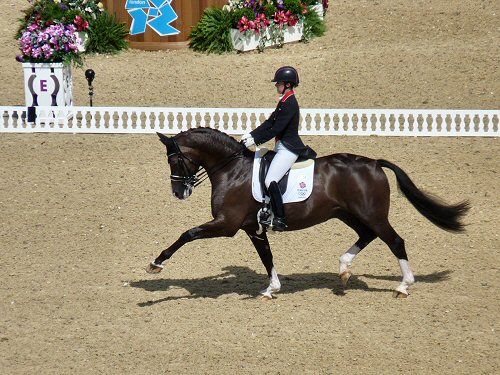
That's enough for today. Illustación: doma clásica, medalle de oro, Inglaterra, Charlotte Dujardin, al trote largo.
Charrería = Horsemanship.
In Mexico this is a form of rodeo. Where various types of skills are used with lasso and animals (cows and horses). It is very different from American rodeo.
Good question Henrietta.
No entiendo bien qué quieres saber , si pusieras las palabras te las traduciría con gusto.
caballo = horse herradura = horseshoe
Y hoy : una foto de un jinete practicando la doma vaquera de España en vestido y silla tradiciónal.

Y aqui vemos jinetes trabajando con los toros, en el campo. Los toros jovenes, se llaman novillos.

A few more words:
la crina= mane
colours of horses are described as having acoat of whatever colour:
un caballo de capa torda = a horse with grey coat, a grey
capa castaña = a bay
una yegua de capa negra= a black mare
picadero= small arena, sand-school mostly circular.
pista= larger arena or training track, la pista de saltos, the show- jumping course
the stables= la cuadra
a box = un boz
the trailer = el remolque
the carriage= el coche

















