
Welcome to the Book & Movie Corner - Bienvenido al rincón de los libros y pelis
Welcome to the Book Corner - Bienvenido al rincón de los libros y pelis 
Take a seat, let us know what you've been reading or watching - Spanish literature or movies from English speakers and English literature or movies from Spanish speakers.
Pick one phrase that you found interesting, exciting or strange. Phrases that don't really work when directly translated would be great! Ask for help if you can't quite understand it or use the format below to help us all learn new and useful phrases and for easy reference
What I've been reading or watching:
Phrase:
Direct translation
Offered translation:
Which bit I found most interesting or I think that I'll find especially useful?:
More than one post on the same work is absolutely fine. Please feel free to add an online link if available and pictures would be great too!
If you just want to make a general post about literature or movies that's fine too
Leave lots of comments too - to encourage us all to keep learning and sharing!

24 Answers
What I've been reading or watching: Blogs en español link
Phrase: Se me traba la lengua.
Direct translation To me the tongue is impeded.
Offered translation: I am tongue tied. (???) Trabarse - Tongue tied
Which bit will you find especially useful?: the whole phrase when I trying to explain why I can't answer someone quickly
I love the classic novels, and I'm reading Treasure Island by Robert Stevenson. I decided to start reading this novel because I had read it before in Spanish, and I thought it would be easier to understand. So far I have had a little trouble with some words and phrases because it is a one hundred year old book and I'm not familiar with the expressions from that time.
Amo las novelas clásicas, estoy leyendo La Isla del Tesoro de Robert Stevenson. Decidí empezar a leer esta novela porque anteriormente la había leído en español y pensé que podría ser mucho más fácil de entender. Hasta ahora, he tenido ciertas dificultades con algunas palabras y frases porque es un libro de hace más de cien años y no estoy familiarizado con las expresiones de aquella época.
Phrase:Fifteen men on the dead man's chest - Yo-ho-ho, and a bottle of rum! Drink and the evil had done for the rest - Yo-ho-ho, and a bottle of rum!
Frase: Quince hombres sobre el cofre de un hombre muerto / Yo-jo-jo, ¡y una botella de ron! La bebida y el diablo se encargan del resto - Yo-jo-jo ¡y una botella de ron!
It is a novel for young people, but it is one of my favorites stories.

What I've been reading or watching: I've just started reading a bit of a children's book - Será Puro Cuento by Alicia Slivia Chomer (Available for free download on Elaleph) Not so much because I know anything about the book or that it interests me but purely as a grammatical exercise
Phrase: Y Martín empezó a caminar despacito, despacito, para que su mochi no volviera a saltar, pero no hubo caso, apenas dio el cuarto paso...
Direct translation: And Martin started to walk little slowly, little slowly, so that his backpack didn't return to jump, but to no avail, as soon as he took his fourth step ...
Offered translation:
And Martin started to walk gingerly, cautiously, so that his backpack didn't start to jump around again, but to no avail, as soon as he took his fourth step....
(I'm not 100% on this and am sure it can be done better, so all suggestions gratefully accepted )
Which bit I found most interesting or I think that I'll find especially useful?:
despacito - I recognized this as the diminutive of despacio/slowly but it wasn't until I did a little research that I learnt that it carries the added meaning of 'carefully'
no hubo caso - as well as 'en vano' I believe this is an alternative for 'to no avail'
What I've been reading:Más allá de mî, by Francisco Jiménez
Phrase:Quizás yo no voy a dar la talla aquí en Santa Clara
Direct translation: Maybe I am not going to give the size here in Santa Clara.
Offered translation:Maybe I am not going to make the grade here in Santa Clara.
**Interesting bit:***Dar la talla*means measure up, make the grade or to be up to the task.
What I've been reading or watching En verdad os digo Juan Jose Arreola
Phrase
pecar de + adjective
Como puede verse, el proyecto es del todo viable y hasta diríamos que peca de científico
Direct translation As can be seen the project is very viable and we would even say that
it is too
scientific
Offered Translation As can be seen , the project is very managable although one might say that is too scientific.
What I find useful or interesting That
the verb which means to sin is used to denote and excess of something
as if the two might be related.
edit what does es de todo means?
What I've been reading or watching: ¡Mira abajo!
Phrase: sin más ní más
Direct translation: (Literally); Without more nor more (which doesn't translate at all)
Offered translation: (What it means); without further ado; sin pensarlo; antes de que lo sepas.
Which bit I found most interesting or I think that I'll find especially useful?: ¡Vuelva a mirar abajo!
El punto principal de leer es disfrutar lo que lees por su propia valor, verdad? Si puedes aprender un poco español al mismo tiempo, ¡tanto mejor!
Recientemente, termine leyendo “Fronterizas”, la cual es una novela escrito por Roberta Fernández. Adentro se quedan seis cuentos, que se trata de seis mujeres de su familia, del pasado y del presente. Por crecer en la frontera entre Tejas y México, la narrador – Nenita – tiene que reconciliar dos mundos, el viejo y el nuevo, el de su cultura natal y el nuevo del norte que extienda sobre su vida tradicional como una manta incomoda.
Ahorita he casi terminado leyendo “Senderos fronterizos,” por Francisco Jiménez. También se trata de un jovencito, en este caso un niño Mexicano y su familia en California a principios de los cuarenta. Da una vista del estado de California desde el punto de vista de este jovencito, quien trabaja en los campos, pizcando zanahorias y desahijando lechuga, en los fines de semanas y antes de y después de la escuela.
Ambos son bien escritos, interesantes, llenos de persones y familias afectuosos. Si vienes aquí a SD frecuentemente, sabes que mi español no es lo mejor, que es quedarse corto! Si yo puedo leerlos, probablemente tú puedes también. La gramática de Senderos fronterizos es mas directo, menos involucrado que la de Fronterizos, y no tienes que averiguar el sentido de todos las palabras, solamente esas que contienen el llave o chiste de una sección o otra.
Si tu, como yo, en este momento no tiene la oportunidad de pasar tiempo en un mundo hispano-hablante, por favor toma la oportunidad de leer una novela de verdad. ¡Puedes! Vale la pena.
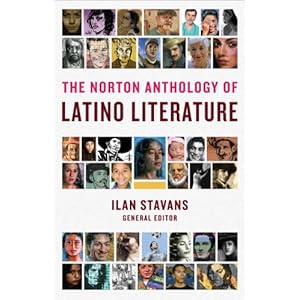
2752 pages, unfortunately in English -- I know this isn't an acceptable post, or the kind you were looking for, but will try to post a baby sentence later ...
Here's a review from Amazon.com:
How can I hand out five stars for a book I haven't read? Because I listened to an hourlong discussion with one of the editors, Ilan Stavans. This book sounds a classic. Don't miss the discussion and some very seductive readings from the anthology! It's available on streaming audio at Public Radio's "On Point" and by podcast.
The collection takes in writings from the 16th century up to just about the day before yesterday, and from Central and South America, through the Caribbean, and includes and contemporary Hispanic writers born in and/or living in the US. This is a book I'm really looking forward to.
The interview/discussion is easy to find at WBUR's "On Point"
What I've been reading or watching: El Evangelio según Lucas (NVI) Capítulo 20
Phrase: Pero cuando lo vieron los labradores, trataron el asunto.
Direct translation: But when the laborers saw him, they treated the issue.
Offered translation: But when the laborers saw him, they discussed the issue.
Which bit I found most interesting or I think that I'll find especially useful?: Although I have heard the word "treat" in English used to apply to a topic or issue, it seems rather archaic. I think a better translation of "tratar el asunto" would be "to discuss the matter," "to talk about the issue," or "to talk over the issue." (Of course, "asunto" can be translated as "issue," "topic," "matter" and probably several other words!)
What I've been reading or watching: Asesinos sin rostro (un libro)
Phrase:
Algiuen se ha ido de la lengua
Direct translation: Someone has gone of the tongue
Offered translation:
Someone has let the cat out of the bag.
Which bit I found most interesting or I think that I'll find especially useful?:
The whole thing because I always say it in Englih 
What I've been reading or watching: The children's book - Será Puro Cuento by Alicia Slivia Chomer (Available for free download on Elaleph)
Phrase: Martín dudó, pero no podía hacer un papelón al lado de Mariana, así que se pararon cerquita del árbol y el ping, pong, pang volvió a empezar
Direct translation: Martin doubted/hesitated, but could not make a fool/disgrace next to Mariana, so he stopped close to the tree and the ping, pong, pang returned to start.
Offered translation:
Martin hesitated but couldn't make a fool of himself in front of Mariana, so he stopped right next to the tree and the ping, pong, pang, started up again.
Which bits I found most interesting or I think that I'll find especially useful?:
Firstly,
dudó
- I didn't realize that dudar (to doubt) could be used to mean
'to hesitate'
second,
hacer un papelón
- that's a new phrase for me,
to make a fool of oneself or disgrace oneself
and finally
al lado de
- where we might say that you don't want to make a fool of yourself
'in front of'
somebody - (and I think 'delante de' works too) al lado de (next to) must be another option as well. But this is the first time I've seen it used this way so please correct me if it's not the case
I am reading Emily Dickinson's poetry again.
Phrase that I like: ''I'm nobody! Who are you? Are you nobody too?
Translation: ''¡Yo no soy nadie! ¿Quién eres tú? ¿Eres tú nadie también?
Unique poetry, with her unique vision of the world.
I have made a number English e-books.They can be read on your computer.
They have audio files so you can listen to an actor reading it while you read it.
Some also have explanations of the language used.
If you send me a PM with your email address I will send one or more to you.
Does anyone have something like this for Spanish learners ?
Best regards Ian
What I've been reading or watching: The children's book - Será Puro Cuento by Alicia Slivia Chomer
Phrase: A esa altura ya nadie podía imaginar que solo se trataba de una travesura de Pulposo…
Direct translation To that height and nobody was able to imagine that only it was about a prank of Pulposo.
Offered translation: At that point no one could imagine that it was just a prank Pulposus ...
Useful Phrase: A esa altura / At that point / At that stage
What I've been reading or watching: El Evangelio según Lucas (NVI) Capítulo 15
Phrase: (El hijo) le dijo a su padre: "Papá, dame lo que me toca de la herencia."
Direct translation (The son) said to his father, "Papa, give me that which touches me of the inheritance."
Offered translation: (The son) said to his father, "Papa, give me my share of the inheritance."
Which bit I found most interesting or I think that I'll find especially useful?: I think this is an interesting use of the verb "tocar" that I have not seen before.
What I've been reading or watching: The children's book - Será Puro Cuento by Alicia Slivia Chomer (Available for free download on Elaleph)
Phrase: Decir que empujaba es poco, como se imaginarán no debe ser nada sencillo escaparse de un disquete, es tan finito y cerrado que..., para peor, con esa cinta toda resbalosa que tiene adentro, creo yo que es casi imposible.
Direct translation: To say that he was pushing is little, as you will imagine it shouldn't be nothing simple to escape from a disquette, it is so thin and closed that, for worse with that tape all slippery the you have inside, I believe that it is nearly impossible.
Offered translation:
To say that he was pushing is an understatement, as you can imagine it would be no easy thing to escape from a disquette, it is so completely enclosed that, even worse with that slippery tape inside, I think it's nearly impossible.
Which bit I found most interesting or I think that I'll find especially useful?:
Decir que .... es poco
I haven't come across this before so I'm not sure if my translation is correct but if it is it's quite a nice easy way to say - to say such and such is an understatement.
Please let me know if you've seen or heard or use this phrase and if I'm on the right track with it's meaning
















