Home
Q&A
La Palabra del Día : habitar

La Palabra del Día : habitar

16
votes

habitar - (transitive verb) to inhabit, to live in

Post your sentences in Spanish and English, then vote for the ones you like. The best answer will be chosen tomorrow on the basis of the greatest number of votes and language correctness.

.

And don't forget to correct your posts as suggested. Do NOT use subject pronouns!

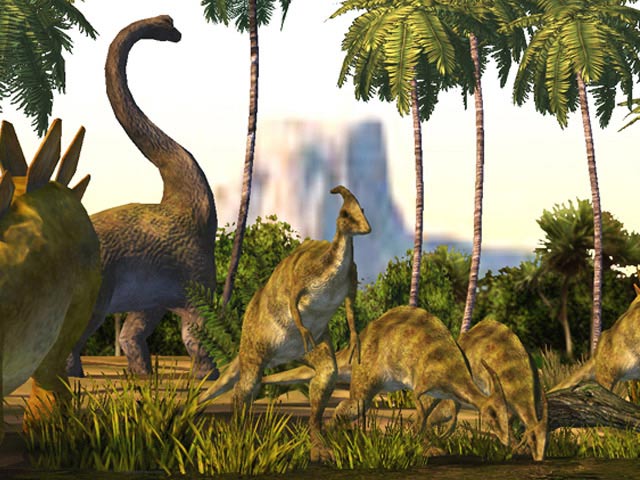
Los Dinosaurios habitaron la tierra durante más de 100 millones de años

Dinosaurs inhabited the earth for more than 100 million years
alt text

9507 views
updated Dec 26, 2010
edited by Vaanz
posted by Vaanz
dinosaurs :) bien hecho Vaanz! - Kiwi-Girl, Dec 22, 2010
wow, a precious picture - Fidalgo, Dec 22, 2010
'Los dinosaurios..'. And although 'por' isn't plain wrong, it isn't the 'go-to' preposition when you talk about periods of time. The correct one here is 'durante'. - bill1111, Dec 22, 2010
thanks for pointing that out Bill, I didn't think 'por; was right but wasn't sure, gracias :) (although it can be used with short periods of time can't it?) - Kiwi-Girl, Dec 22, 2010
Thanks MC and Bill - Vaanz, Dec 22, 2010

20 Answers

10
votes

alt text

Y el Verbo se hizo carne y Habitó entre nosotros, (Juan 1:14)

And the Word became flesh and dwelt among us, (John 1:14)

updated Dec 26, 2010
edited by Maria-Russell
posted by Maria-Russell
beautiful thought Maria :) - 00b6f46c, Dec 22, 2010
Excellent! - Rolest, Dec 22, 2010
Thanks for the kind words. - Maria-Russell, Dec 22, 2010
7
votes

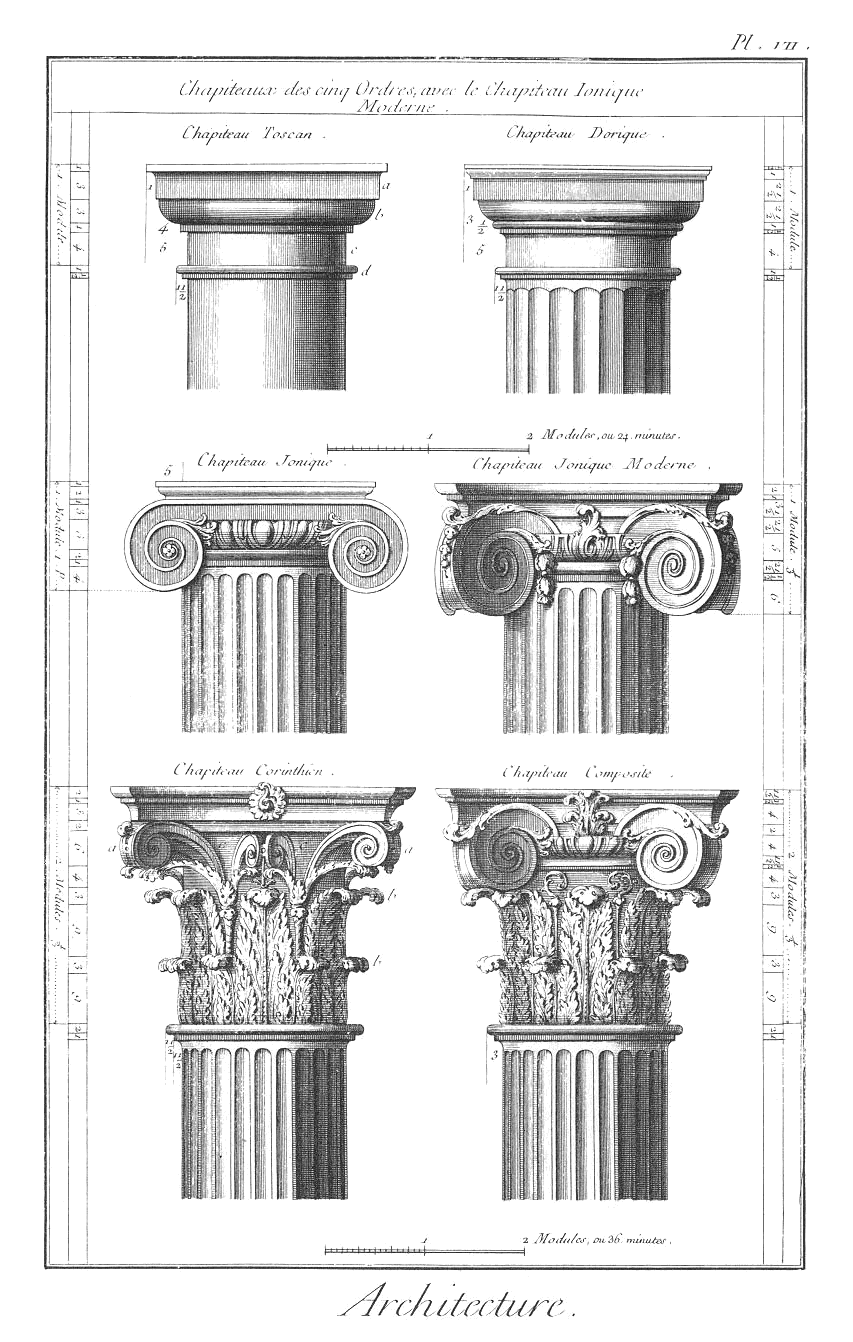
Los griegos concebían la arquitectura para crear sitios en los que pudieran habitar los diferentes estratos sociales.
( The Greeks conceived architecture to create sites that different social strata may inhabit. )
Carlos Pellicer Cámara alt text
updated Dec 22, 2010
edited by sv2qp
posted by sv2qp
¡Muy interesante! - galsally, Dec 22, 2010
tnks Sally.. :) - sv2qp, Dec 22, 2010
:) Sks - cogumela, Dec 22, 2010
6
votes

¿Es un hábito de una monja habita en su hábito?

Is it a habit for a nun to inhabit her habit?

alt text

updated Dec 22, 2010
edited by Echoline
posted by Echoline
'que habita..' means 'that inhabits her habit'. To say 'to inhabit her..' you need 'habitar en su habito', without 'que' - bill1111, Dec 22, 2010
:) - bandit51jd, Dec 22, 2010
5
votes

Cinco enemigos de la paz habitan con nosotros - la avaricia, la ambición, la envidia, la ira y el orgullo, si desapareciesen, viviríamos una vida tranquila , sin problemaswink


alt text Five enemies of peace live with us - avarice, ambition, envy, anger, and pride; if these 5 enemies disappeared we would live a peaceful life with no problems winkalt text

updated Dec 22, 2010
edited by 00b6f46c
posted by 00b6f46c
I'd like to see what a native speaker thinks about 'if these .. disappeared .. we will live', but to me it sounds as bad grammar. I'd say 'if.. we would/should live' - bill1111, Dec 22, 2010
In Spanish: 'si desapareciesen, viviríamos una vida tranquila..' . Your conditional clause with a verb in indicative ('desaparecieron') only works when you are not talking about hypothetical thoughts. eg: 'Si desapareció, alguien lo habrá cogido' - bill1111, Dec 22, 2010
...enemies of peace live with us...we would live a peaceful life. - JoyceM, Dec 22, 2010
Thanks so much Bill & Joyce :)) - 00b6f46c, Dec 22, 2010
4
votes

alt text

Ivan Illich

Habitar es la huella de la vida

Las bestias tienen madrigueras; el ganado, establos; los carros se guardan en cobertizos y para los coches hay cocheras. Sólo los hombres pueden habitar. Habitar es un arte. Únicamente los seres humanos aprenden a habitar. Insiste en la profunda relación entre habitar y vivir, y en sus derivaciones: la habitación, como huella de la vida (nunca acabada, nunca completamente planificada), florece y decae al compás de los esplendores y fracasos de sus habitantes.

La casa no es una madriguera ni una cochera. En muchas lenguas, en vez de habitar puede decirse también vivir. ¿Dónde vive usted?, preguntamos, cuando queremos saber el lugar en el que alguien habita. Dime cómo vives y te diré quién eres.

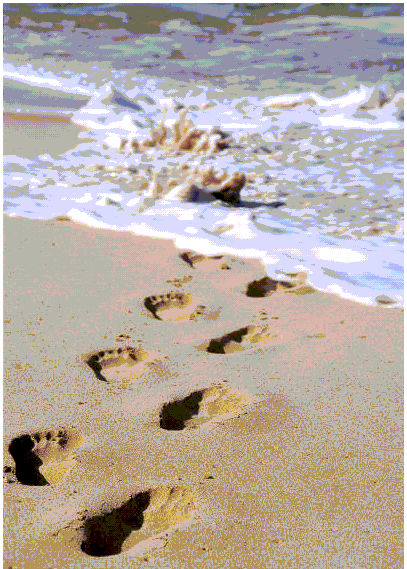
To inhabit is the footprint of the life

The beasts have burrows; the cattle, stables; the cars are kept in a shed and for the coaches there are garages. Only mankind can inhabit. To inhabit is an art. Only the human beings learn to inhabit. Understand the profound relationship between inhabiting and life, and in the derivations: the habitation, how the footprint of life (never finished, never completely planned), flowers and decays following the compass of the splendors and failures of the inhabitants.

The house isn't a burrow or a garage. In many languages, in place of "to inhabit" one can also say "to live." Where do you live? We ask, when we want to know the place where someone lives. Tell me how you live and I will tell you who you are.

updated Dec 22, 2010
edited by JoyceM
posted by JoyceM
oooooh my god, Joyce! This is the paragraph of the day ! : ) - cogumela, Dec 22, 2010
Nice one, indeed. I liked it. :) - cogumela, Dec 22, 2010
Heidi will probably say it's too long, but I thought it was worth it. - JoyceM, Dec 22, 2010
Remember that outside of Mexico and perhaps a handful of other countries that use 'carro' for 'car', it's meaning is that of 'cart', and considering it speaks of keeping them in a shed, that seems the one he's talking about there. - bill1111, Dec 22, 2010
4
votes

Como los rayos del sol, la mirada de Dios enciende nuestros corazones, sin importar dónde habitamos...

Like rays of sunshine, the eyes of God light our hearts, no matter where we inhabit...

alt text

updated Dec 22, 2010
edited by luz_72
posted by luz_72
'Como un rayo de sol' or 'Como los rayos del sol'. These are the only combinations of articles that sound good to translate 'rays of sunshine' - bill1111, Dec 22, 2010
Gracias, Bill:) - luz_72, Dec 22, 2010
inhabit sounds strange here in English because it is a transitive verb (ie. needs and object - eg he inhabits the attic etc, lol) Luz, I would say, no matter where we 'live' :) - Kiwi-Girl, Dec 22, 2010
actually I thought 'habitar' was transitive too although it hasn't been used that way in a number of sentences in this thread? Bill? je je - Kiwi-Girl, Dec 22, 2010
4
votes

El amor por mis hijos habita en mi corazón.

My love for my children lives in my heart.

updated Dec 22, 2010
posted by galsally
Sweet! - sv2qp, Dec 22, 2010
4
votes

El espacio de habitar. (Carlo Scarpa) alt text

updated Dec 22, 2010
posted by Kiwi-Girl
:) - cogumela, Dec 22, 2010
3
votes

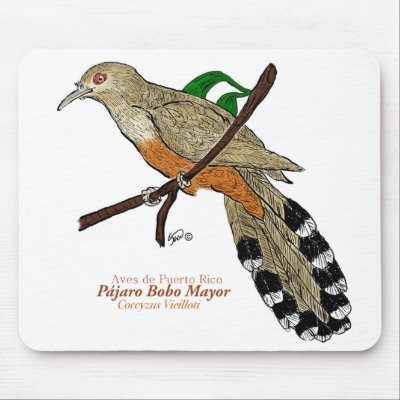
The Puero Rican Lizard Cuckoo inhabits the forests of Puerto Rico.

El Pájaro Bobo Mayor habita los bosques de puerto rico.

(And he has a computer mouse reaching for his tail tongue rolleye)

alt text

updated Dec 22, 2010
posted by pesta
También habita una alfombrilla de ratón :) - pesta, Dec 22, 2010
:) - cogumela, Dec 22, 2010
oh my goodness, keep this one away from Gekko! - Kiwi-Girl, Dec 22, 2010
typo 'Puerto Rican'. Also, keep in mind that while adjectives related to countries are kept in lowercase in Spanish (español, puertorriqueño, etc..), their proper nouns aren't (España, Puerto Rico) - bill1111, Dec 22, 2010
3
votes

La vida es menos estresante cuando la gente habita en una granja', en lugar de un apartamento en la ciudad.


Life is less stressful when people live in a farm house, instead of an apartment in the city.

alt text

updated Dec 22, 2010
edited by Rolest
posted by Rolest
'cuando la gente habita en una granja'. when=cuando. 'gente', although it has a plural meaning, is treated as a singular noun. 'en' instead of 'dentro' when you talk about living in a house. And 'casa de campo' doesn't have to be a farm, that's a 'granja' - bill1111, Dec 22, 2010
Gracias Billstpor. - Rolest, Dec 22, 2010
3
votes

El hábito de un monje que se llama un manto.Habitan en los países asiáticos

The habit of a monk is called a Robe.They inhabit Asian countries!

Monk lama

updated Dec 22, 2010
edited by ray76
posted by ray76
Same deal as 'that inhabits..'. You need 'se llama manto', without 'que'. Also, while not 'incorrect', it's more common to refer to a category of people like this: 'El hábito de los monjes', or 'El uniforme de los policías' (plural/definite article) - bill1111, Dec 22, 2010
2
votes

¡MIRAD cuán bueno y cuán delicioso es Habitar los hermanos juntos, en unidad! Psalm 133.11 Reina Valera (1909)

Son of David. Behold, how good and how pleasant it is For brothers to dwell together in unity!

alt text

updated Dec 22, 2010
edited by sanlee
posted by sanlee
Yikes.. that might be a published translation of the Bible, but it sounds very weird, even taking its age into account. 'habitar igualmente en uno' sounds nothing like 'to dwell together in unity'. That would be: 'habitar juntos, en unidad/unión' - bill1111, Dec 22, 2010
Thanks, Billstpor. Is this correct? - sanlee, Dec 22, 2010
2
votes

Hay demasiadas cosa que habitan en la mente. Tenemos que despojarnos de ellas para poder pensar nitidamente.

There are too many things inhabiting the mind! We have to clear them out in order that we may think clearly!

alt text

updated Dec 22, 2010
edited by 002262dd
posted by 002262dd
Hay demasiadas cosas que habitan en la mente. A veces tenemos que despojarnos de ellas para poder pensar nítidamente. Good, Joe! - cogumela, Dec 22, 2010
2
votes

La selva amazónica está habitada por tribus indígenas.

The amazon rainforest is inhabited by indigenous tribes.

alt text

updated Dec 22, 2010
posted by wansell
I have been there. - JoyceM, Dec 22, 2010
You forgot to capitalize: 'The Amazon Rainforest'. 'La selva amazónica' is fine though. - bill1111, Dec 22, 2010
1
vote

En inglés, un "squatter" es alguien que habita ilegalmente.

In English, a squatter is someone that inhabits property illegally.

updated Dec 22, 2010
edited by 008f2974
posted by 008f2974
Good, just ilegalmente, not capitalized. In Spanish we call them "ocupas" (slangly oKupas) - cogumela, Dec 22, 2010
gracias - 008f2974, Dec 22, 2010
Well.. 'okupa' is the word used to describe modern-day 'squatters', usually affilitiated to the anarchist movement. That word does not apply to other types of 'squatters', like those who settle in land they don't own. - bill1111, Dec 22, 2010
In other words, 'okupas' occupy derelict buildings, they do not build illegally on empty land. - bill1111, Dec 22, 2010