Mitos y leyendas regionales
Siguen vivos estos seres mitológicos en la cultura mexicana:
1. La Llorona Es un supuesto ente (mujer) vestido de blanco que aparece en los cuerpos de agua gritando "Aaaay mis hiiiijoooos".
2. El Nahual Es un humano con poderes sobrenaturales para transformarse en algún animal, en especial en perro de color negro.
¿Cuáles existen donde vives?
7 Answers
Una estrige es un tipo de vampiro del folclore eslavo (especialmente polaco). Mientras está viva, la estrige tiene dos corazones y dos almas, así como dos filas de dientes (uno de los cuales crece con normalidad). Cuando la persona muere, sólo una de las almas fallece mientras que la otra provoca que la estrige muerta vuelva a la vida y se alimente de otros seres vivos. Se dice que decapitar el cuerpo y quemar la cabeza separada del resto del cuerpo previene que la estrige vuelva de la muerte aunque quemar el cadáver tumbado boca abajo con una hoz alrededor de su cabeza también suele funcionar. fuente
Dentro de la mitología eslava, una rusalka era un fantasma, ninfa del agua, súcubo o demonio que vivía en un canal. De acuerdo con muchas tradiciones, una rusalka era una sirena, quien vivía en el fondo de los ríos. A medianoche, acostumbraban salir y bailar en los prados. Si veían a un hombre hermoso, lo hechizaban con canciones y bailes, y entonces lo conducían al fondo del río a vivir con ellas. En algunas ocasiones se dice que los ojos de una rusalka brillan como fuego verde, en otras se dice que ellas son extremadamente pálidas, sin pupilas visibles, como en el famoso dibujo de Iván Bilibin. Su cabello es descrito como de color verde, y siempre húmedo. Según algunas leyendas, si se secase su cabello, la rusalka moriría. fuente
El Coco se esconde bajo las camas y se asusta a los niños que no quieren comer ni hacer la tarea o que se portan mal. Es el equivalente al Bogeyman.
En la noche va a salir El Coco por sacarme la lengua
También existía El Robachicos que era un hombre con un costal que igualmente se llevaba a los niños malos. Creo que en el 2010 ya no es tan común oír de él.
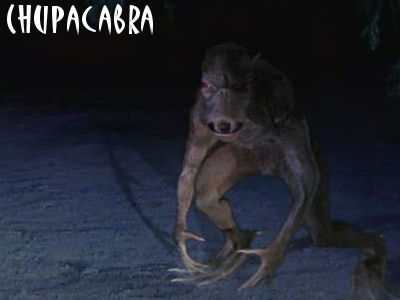
El Chupacabras
The Chupacabras, which means "goat sucker," is a monster said to inhabit the island of Puerto Rico, and is also known in other Latin American countries. It is said to be a monster that loves to drain goats of their blood. The Chupacabras began appearing when local ranchers were unable to explain why their goats were dying.
El Cupacabras es un monstruo que habita la isla de Puerto Rico, y también es conocido en otros países latinoamericanos. Se dice que es un monstruo al que le encanta chuparle toda la sangre a las cabras. El Chupacabras comenzó a aparecer cuando los agricultores locales no podían explicarse por qué sus cabras estaban muriendo.
I swear I hadn't seen the earlier post asking about the Chupacabras when I posted this! 
Maybe the most popular of our legendary monsters is the Manananggal. The thought of it surely kept us out of the streets at night when we were still children.


(From Wikipedia) A manananggal is described as being an older, beautiful woman capable of severing its upper torso in order to fly into the night with huge bat-like wings to prey on unsuspecting, pregnant women in their homes; using an elongated proboscis-like tongue, it sucks the hearts of fetuses or blood of an unsuspecting, sleeping victim. The severed lower torso is left standing and it is said to be the more vulnerable of the two halves. Sprinkling salt or smearing crushed garlic or ash on top of the standing torso is fatal to the creature. The upper torso then would not be able to rejoin and will die at daybreak. The name of the creature originates from an expression used for a severed torso: manananggal comes from the Tagalog, tanggal (cognate of Malay tanggal) which means to remove or to separate. Manananggal then means the one who separates itself (in this case, separates itself from its lower body).
Superstitious folk in the Visayan provinces still hang cloves of garlic or onion around windows, doors, etc. with the purpose of repelling this creature... may be a product of mass hysteria or intentionally propagated to keep children off the street, home at night and wary or careful of strangers, or simply to entertain them.
We have Big Foot, who is a supposedly ape-like creature who lives in the forests, mainly in the Pacific Northwest region of North America. Bigfoot is usually described as a large, hairy, bipedal humanoid.

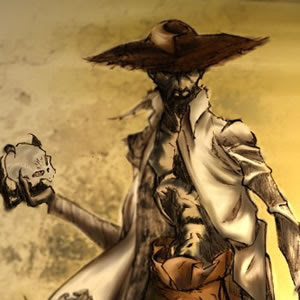
El Silbón
Esta es sin duda la leyenda o cuento de fantasmas más aterrorizante de mi infancia. ¡La primera vez que escuché la historia narrada y con efectos especiales, no pude dormir por varios días!
Del artículo de Wikipedia: "El Silbón es un personaje legendario de Venezuela y Colombia, especialmente de Los Llanos; descrito como un alma en pena.
Se trata, según la leyenda, del fantasma de un joven que asesinó a sus padres, y por ello está condenado a vagar como un alma en pena eternamente con un saco lleno de los huesos de sus progenitores.
Tiene un silbido característico que se asemeja a las notas musicales do, re, mi, fa, sol, la, si, en ese mismo orden subiendo el tono hasta fa y luego bajando hasta la nota si. Se dice que cuando su silbido se escucha muy cerca no hay peligro, ya que el silbón está lejos, pero si se escucha lejos es porque está cerca. También se dice que escuchar su silbido es presagio de la propia muerte. Puede estar en cualquier sitio en cualquier hora."
This is by far the scariest legend or ghost story of my childhood. The first time I heard the tale, with sound effects and all, I couldn't sleep for days!
"El Silbón (the whistler) is a legendary character from Venezuela and Colombia, especially from the Plains, and is described as a soul in penance.
According to legend, it is the ghost of a young man who murdered his parents, and for this he has been condemned to wander eternally doing penance carrying a sac with their bones.
It has a characteristic whistle that resembles the notes do, re, mi, fa sol, la, ti, in that order and raising in pitch up to fa, , and then descending to ti. It is said that when the whistle is heard close by it is safe, because El Silbón is far away, but if you hear it far away, it means it is near. It is also said that hearing its whistle is an omen of one's own death. It could be any place at any time."
Here is a Youtube link to a not-so-scary acted out version, in very Venezuelan Spanish, for those who would like to practice andstretch their listening skills to the max. I will NOT, however, check out what you thought you heard! Too much going on in that video, and too much regional vocabulary!
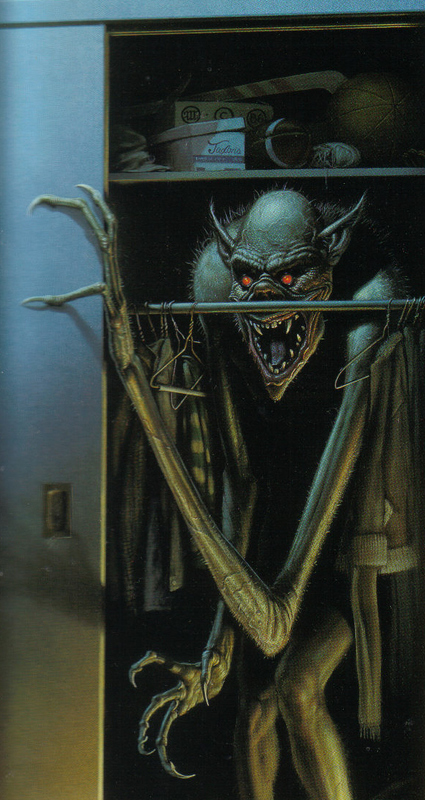
We have something called the Boogyman, who often lives in a child's closet and makes them afraid to sleep in the dark.
The Boogyman is a legendary ghost-like monster. The bogeyman has no specific appearance and conceptions of the monster can vary drastically even from household to household within the same community; in many cases, he simply has no set appearance in the mind of a child, but is just an amorphous embodiment of terror.