La semana santa
Today is the start of the Holy Week in the Philippines. This is the time when you would still hear a lot of Spanish words used around here, especially from the elderly. Yesterday, (Palm Sunday) is called domingo de ramos. Today till Saturday, the days are called lunes santo, martes santo, etc. On Sunday, Easter Sunday, it is called domingo de gloria. When I was still a child, every viernes santo my mom would also cook dried and salted bacalao. But I don't think that is being done around here anymore. Are those words/phrases used and custom done in Spanish countries?
4 Answers
Rikko, thank you so much for sharing the cultural and religious information about how this week leading into Easter is celebrated by the beautiful people of the Philippines.
I have very close family friends who are serving as missionaries in Negros Occidental. My friend Lorna was born and raised in that part of the country. She has moved back there a few years ago with her American husband and their two young children. My daughter has spent two weeks with them, and fell in love with the people of your country. One day, I hope to visit myself.
Also, our best friends adopted an orphan from outside of Manila this past May. So I appreciate learning about how the people of your country celebrate Holy Week.
On Sunday, Easter Sunday, it is called domingo de gloria.
I love this name for Easter. Thank you for sharing this cultural information. I'm sure someone with more information about the celebration of Easter in Spanish speaking countries will be around to answer your question. I just wanted to say "gracias" in the meantime. 
Sure Rikko. Yesterday was Domingo de Ramos here, and you could see lots of people with their olives going to church to have them blessed...

Today monday is Lunes Santo as you mentioned... and Jueves y Viernes Santo are the most important days of the week before Easter. The Catholics (most of the Argentinian population) remember the passion and death of Jesus. Thrusday and friday are holidays here. Next sunday is Easter. In Argentina we call it "Domingo de Pascua". There aren't as many traditions as in the States, but children eat the "Easter chocolate egg" or "Huevo de Pascua". "Roscas de pascua" are very traditional as well 
.
These are the kind of things you can find here in Argentina:


BTW, in case you are wondering why the Holy Week is a big thing here, it's because we are predominantly Catholics and we were under Spain for at least 300 years. On Holy Thursday and Good Friday, all shops/malls will be closed. Only religious programs are shown/heard in the local TV/radio stations and more than half of them would not even be in operation on those 2 days.
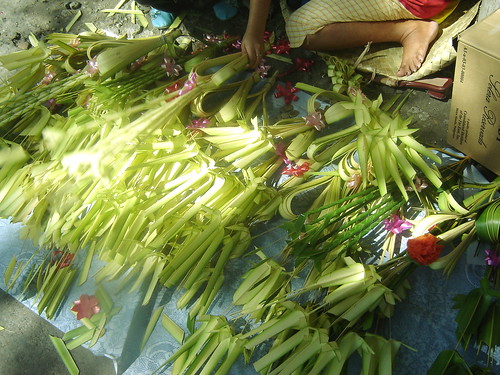
This is how domingo de ramos (yesterday) would typically be like: the day before, you will see many vendors near churches selling the coconut-tree palms creatively worked out (pic 1) to attract buyers. These are then brought by the people to church the next day and the priest blesses them with holy water (pic 2). The people then bring these home and would usually hang them in the walls of their homes or behind the main door to serve as a religious object to ward of evil. These will stay there till they dry up and disintegrate or till the next domingo de ramos, whichever comes first. Not everyone observes these rituals, but quite a number still do.